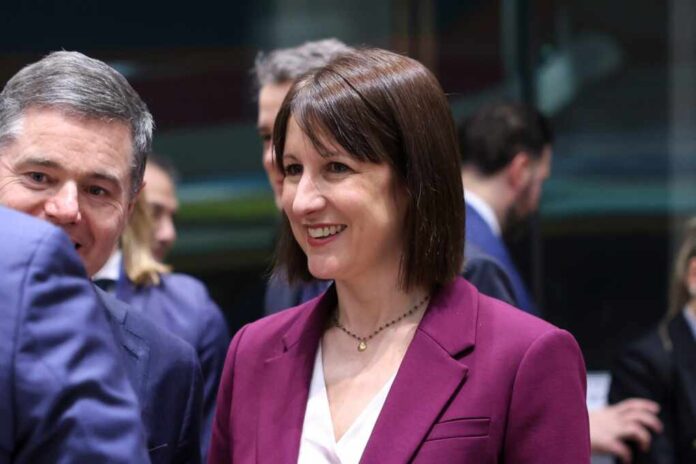
A new budget policy is threatening economic stability and sparking a fierce debate over fiscal mismanagement in the UK. Chancellor Rachel Reeves has ignited controversy by claiming a £22 billion fiscal ‘black hole’ to justify significant tax increases, a move critics from the Institute for Fiscal Studies (IFS) to the Conservative opposition argue is a political manipulation of predictable financial pressures. With the independent Office for Budget Responsibility (OBR) even disputing the scale of the crisis, questions of transparency and trust loom large over the government’s economic agenda, setting the stage for long-term implications for the UK economy and strained household finances.
Story Highlights
- Reeves claims a £22 billion fiscal ‘black hole’ to justify tax increases.
- Critics argue the fiscal pressures were predictable, not sudden.
- Conservative opposition accuses Labour of misleading the public.
- Office for Budget Responsibility disputes the scale of the fiscal crisis.
Reeves’ Fiscal ‘Black Hole’ Under Scrutiny
Chancellor Rachel Reeves has sparked controversy by declaring a £22 billion fiscal ‘black hole’ in the UK budget, a move she argues justifies £26 billion in tax hikes. Critics, including the Institute for Fiscal Studies (IFS) and the Conservative opposition, challenge the validity of this claim, suggesting the so-called black hole consists of predictable fiscal pressures Labour knew about prior to the election but chose not to disclose.
The IFS contends that the fiscal pressures were transparent and that Labour, aware of these challenges, misled voters during their campaign by promising no tax increases. This narrative has been seized upon by the Conservative opposition, who claim Labour planned the tax rises all along and used the fiscal black hole as a convenient justification.
https://x.com/business/status/1993756863251296443
Disputed Figures and Political Ramifications
The Office for Budget Responsibility (OBR), an independent watchdog, disputes the £22 billion figure, estimating the true hidden costs from the previous government to be £9.5 billion. This discrepancy has fueled debates about the integrity and transparency of Labour’s fiscal management. The OBR’s accidental early release of budget details further complicates the situation, drawing criticism from both sides of the political spectrum.
Despite the controversy, Reeves defends the budget as necessary to address the inherited fiscal crisis and claims it will stabilize inflation and provide relief to families. However, the contradiction between her current actions and past promises of no tax hikes has led to accusations of deceit and fiscal mismanagement.
Long-Term Implications for the UK Economy
The implications of this budget are far-reaching. The tax hikes and increased borrowing could dampen economic growth and consumer confidence. The freeze on income tax thresholds will push approximately 1.7 million more taxpayers into higher tax brackets, further straining household finances.
The controversy has also strained Labour’s credibility on fiscal matters, providing the Conservative opposition with ammunition to challenge their governance. As the black hole potentially expands to £50 billion, questions about fiscal sustainability and transparency continue to loom large over the UK government.
Watch the report: Rachel Reeves’ budget: a tale of disaster hidden in the detail
Sources:
- Reeves accused of misleading public on Budget black hole to justify £26bn tax raid | The Independent
- Politics latest: Rachel Reeves accused of misleading voters over reason for tax rises
- Rachel Reeves accused of lying to justify tax raid
- Rachel Reeves ‘lied to Brits about £21bn black hole to justify Benefits Street tax raid on workers’ – and knew the UK actually had a £4bn SURPLUS