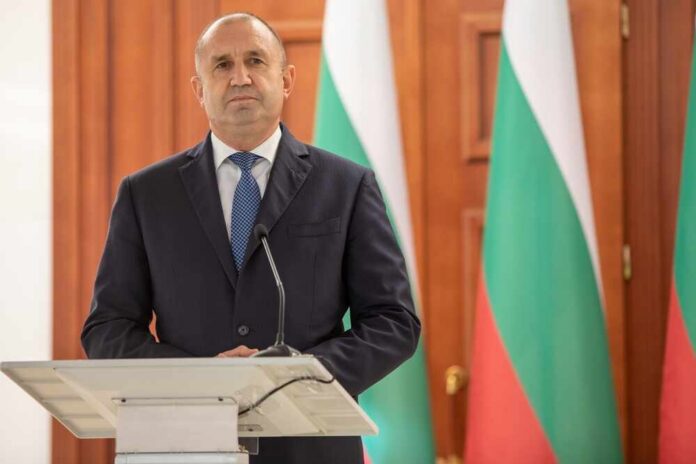
Bulgaria’s landslide election victory for a Euroskeptic former president signals a potential geopolitical realignment that could weaken European unity on Ukraine and reshape Eastern European foreign policy toward Moscow.
Quick Take
- Exit polls show Rumen Radev’s Progressive Bulgaria coalition winning 37-44% of votes in April 19 elections, far outpacing rivals and ending years of political paralysis.
- Radev, who resigned his presidency in January 2026 to lead the coalition, has openly criticized Ukraine aid, EU sanctions on Russia, and NATO expansion.
- The result reflects voter frustration with corruption and governmental dysfunction, but raises concerns about Bulgaria’s pro-Russian policy shift within the EU and NATO.
- Radev’s coalition likely falls short of a parliamentary majority, forcing coalition negotiations that could determine whether Bulgaria aligns with pro-EU reformists or pro-Russian factions.
Chronic Instability Ends—But at What Cost?
Bulgaria held its eighth parliamentary election in five years on April 19, 2026, reflecting a nation exhausted by corruption scandals, failed coalitions, and governmental deadlock. Voters faced a stark choice: maintain the establishment or embrace an outsider promising reform. Exit polls project Radev’s Progressive Bulgaria capturing 37-44% of the vote, demolishing the previous ruling coalition led by Boyko Borisov’s GERB-SDS party, which polled at just 12.5-16%. For a country where no single party has dominated in a generation, this represents an unprecedented concentration of political power and signals voters’ desperation for stability and anti-corruption action.
The Euroskeptic Challenge to European Unity
Radev’s ascendancy poses a strategic challenge to European cohesion on Russia policy. As president until January 2026, Radev built a reputation for opposing Ukraine military aid, criticizing EU sanctions, and questioning NATO expansion—positions that align with Moscow’s geopolitical interests rather than Brussels’ collective defense strategy. His victory, combined with the recent electoral defeat of Hungary’s Viktor Orbán, suggests Eastern European voters are fracturing along pro-Russia versus pro-EU lines. Bulgaria’s role as an EU and NATO member makes its foreign policy pivot consequential for Western strategy toward Ukraine and Russian aggression.
Anti-Corruption Appeal Masks Ideological Division
Radev’s campaign capitalized on legitimate voter anger over systemic corruption and governmental paralysis—frustrations shared across the political spectrum. His Progressive Bulgaria coalition, composed of ex-socialist parties and Radev loyalists, positioned itself as a reformist alternative to decades of GERB-led establishment rule. However, analysts debate whether Radev’s anti-corruption platform masks a deeper ideological agenda favoring Russian interests over European integration. The low voter turnout reflects public cynicism about whether any government can truly deliver reform or whether elites remain insulated from accountability.
Coalition Negotiations Will Determine Bulgaria’s Direction
Exit polls suggest Progressive Bulgaria commands a strong plurality but likely falls short of a parliamentary majority, necessitating coalition talks. The coalition’s composition—whether Radev partners with pro-EU reformists or pro-Russian factions—will determine Bulgaria’s actual policy direction. Radev’s declaration of “uncontested victory” and Borisov’s swift concession via Facebook suggest acceptance of the results, but the real power struggle unfolds in backroom negotiations. If Radev aligns with pro-Russian partners, Bulgaria could become a brake on EU unity regarding Ukraine and sanctions policy.
The Bulgarian election reflects a broader pattern: voters across the ideological spectrum are rejecting traditional establishment parties and demanding change, yet the alternatives they embrace vary sharply. While conservatives and liberals disagree on solutions, both increasingly view their governments as captured by corrupt elites indifferent to ordinary citizens’ struggles. Radev’s victory demonstrates that anti-establishment sentiment transcends left-right divisions—but it also reveals how that anger can be channeled toward outcomes that benefit authoritarian powers rather than democratic reform.
Sources:
Bulgaria’s pro-Russian former president set for landslide win, exit polls show