When your own energy secretary contradicts your political promises on national television during wartime, the resulting public spanking reveals more about leadership chaos than fuel forecasts.
Story Snapshot
- Energy Secretary Chris Wright predicted gas prices would stay above four dollars per gallon through 2026 during CNN interview while U.S.-Israeli war in Iran disrupted oil supplies
- President Trump publicly rebuked Wright hours later, calling him “totally wrong” as administration struggled to manage voter anger over pump prices
- Wright backpedaled before Senate testimony the same day, claiming he never made the forecast despite recorded CNN interview
- Internal GOP fracture exposed political vulnerability as war drags into eighth week with no resolution to Strait of Hormuz disruptions
When Reality Collides With Campaign Promises
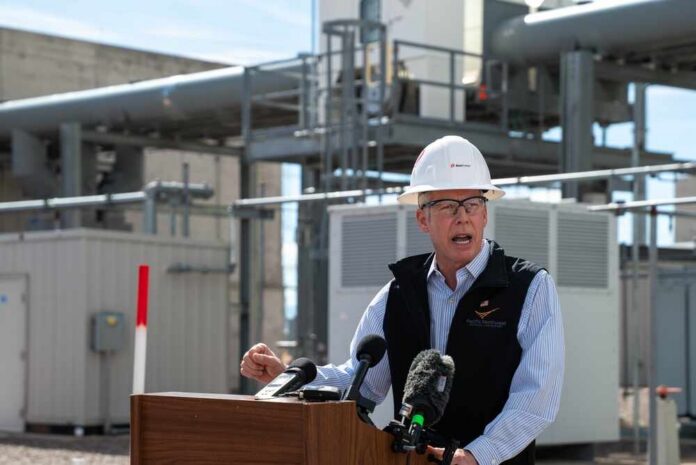
Chris Wright stepped into a political minefield during his CNN State of the Union appearance in late April 2026. As Energy Secretary under Trump’s second administration, Wright faced Jake Tapper’s questions about gas prices hovering above four dollars per gallon during week eight of the U.S.-Israeli conflict in Iran. Wright acknowledged prices had peaked but cautioned they might not drop below three dollars until next year. The statement represented market realism from a former oil executive who understood supply chain complexities when the Strait of Hormuz faces disruption.
Trump’s campaign promises centered on energy dominance and low fuel costs. The Iran war obliterated that narrative. Within hours of Wright’s CNN interview, Trump told The Hill his energy secretary was “totally wrong” about the timeline. The public contradiction exposed the administration’s desperation to control messaging while global events spiraled beyond White House control. Wright’s data-driven forecast clashed with Trump’s political imperative to reassure voters that relief was imminent, creating a spectacle of internal disagreement that Democrats eagerly amplified.
The Senate Hearing Backpedal
Wright appeared before the Senate Appropriations Subcommittee on April 22, the same day Trump’s rebuke hit headlines. His testimony took a curious turn. Wright insisted he never predicted prices would remain elevated until next year, directly contradicting his recorded CNN statements. The walk-back appeared calculated to salvage his standing with Trump while maintaining enough ambiguity to avoid outright perjury. Senators pressed him on war impacts and timeline uncertainties, particularly regarding when the Strait of Hormuz might fully reopen to tanker traffic.
The hearing underscored Republican vulnerabilities heading toward midterms. GOP messaging relied on promising quick relief once the Iran conflict resolved, but Wright’s initial honesty and subsequent retreat revealed no coherent plan beyond hoping military operations concluded swiftly. Democrats seized on the contradiction as evidence of administration incompetence. Rural and low-income drivers, already stretched by inflation, faced continued pain at the pump with no credible timeline for sub-three-dollar gas. Wright’s oil industry background made his pessimism more damaging than typical political spin.
War Economics Override Political Spin
The U.S.-Israeli war in Iran began around early March 2026, triggering oil supply disruptions reminiscent of 2022’s Ukraine crisis but centered in the Persian Gulf. Gas prices surged past four dollars as markets priced in extended conflict and potential Strait of Hormuz blockages. Trump inherited the conflict dynamics but faced accountability for campaign promises about energy independence and stable prices. Wright’s CNN comments acknowledged market forces beyond presidential control, a concession that undermined Trump’s narrative of executive omnipotence over fuel costs.
Historical precedents show Trump dislikes advisors who publicly contradict optimistic messaging. During his first term, similar clashes occurred over trade policy and economic forecasts. Wright’s initial realism suggested either political naivety or deliberate positioning as the administration’s truth-teller, neither of which survived Trump’s swift public rebuke. The incident demonstrated how wartime economics constrain even populist leaders who built brands on promise-keeping. Oil markets operate on supply-demand fundamentals that presidential tweets cannot override, a reality Wright understood but Trump refused to acknowledge publicly.
Political Fallout and Credibility Costs
The Wright-Trump split handed Democrats a potent attack line: Republicans started a war they cannot afford to finish, with voters paying the price at gas stations nationwide. Wright’s retraction before the Senate compounded credibility damage rather than containing it. Observers noted the impossibility of unhearing his CNN forecast, making his denial appear desperate rather than clarifying. The episode reinforced perceptions of administration disarray on core voter concerns like household budgets and foreign policy competence.
Trump Energy Sec Deflects on $5 Gas Price Prediction by Attacking Dems Iran War Stance https://t.co/VtOS0C6uVr
— Mediaite (@Mediaite) May 10, 2026
Longer-term implications hinge on war duration. If conflict extends into 2027 with gas prices stuck above three dollars, Wright’s original forecast will haunt Republicans during midterm campaigns. Trump’s categorical rejection of that possibility boxes him into claiming quick victory or blaming saboteurs when relief fails to materialize. Energy sector volatility continues as markets await Strait developments, while renewable energy pivots remain politically irrelevant during acute fossil fuel crises. The fundamental question persists: can political messaging override economic reality when voters fill their tanks weekly and track every price fluctuation?
Sources:
Wright downplays energy price forecast after Trump rebuke