When a former vice president calls the American Dream a “myth,” she’s not just describing voter frustration—she’s auditioning to lead the next argument about what America owes its working families.
Story Snapshot
- Kamala Harris told a Democratic audience that for many Americans the Dream feels “more myth than reality,” and she put responsibility on both parties for eroding trust.
- She tied today’s pessimism to concrete pressures: AI-driven job disruption, social-media-fueled division, and concentrated elite power.
- Polling cited alongside the speech showed nearly half the country doubts the Dream still exists, with skepticism higher among Democrats and younger voters.
- After that DNC message, Harris carried the theme on her book-tour circuit, shifting from diagnosis (“myth”) to prescription (“revival”).
The line that landed: “myth” signals a strategic pivot after 2024
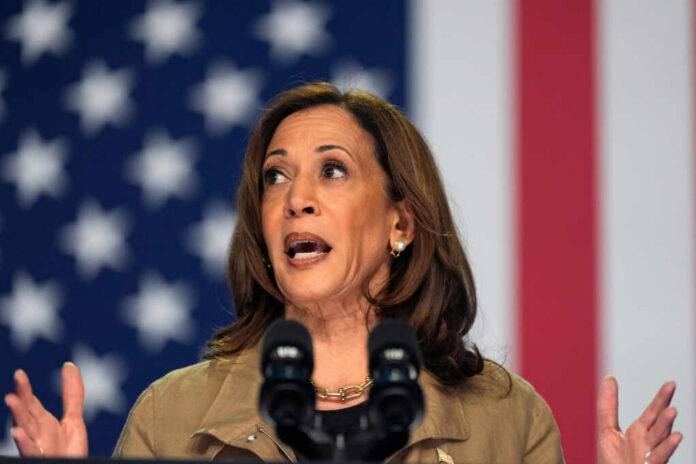
Kamala Harris delivered her bluntest post-2024 message on December 12, 2025, at a Democratic National Committee-related gathering: for so many Americans, the American Dream has become “more of a myth than reality.” That phrasing matters because it rejects the comforting party script that a few messaging tweaks fix everything. Harris framed the problem as institutional, not cosmetic, and aimed her warning inward at Democrats tempted to stay “bullish” after losing the White House.
Harris’s critique also served a second purpose: it recast her from last cycle’s standard-bearer into a movement diagnostician, someone willing to say the quiet part out loud. That move can energize an exhausted base, but it also risks confirming the country’s worst suspicions that leaders mainly narrate decline. Older Americans have seen this movie before—politicians declare a crisis, then campaign on fixing the crisis they helped manage.
What she blamed: technology shocks, elite concentration, and social distrust
Harris pointed to AI job displacement and the accelerating churn of modern work, a subject that lands because people can feel it even when headlines lag. She also targeted social media as a driver of division, not merely a platform for debate, and argued that concentrated power among elites corrodes legitimacy. Those are broad claims, but they align with what many households experience: fewer stable ladders upward, more credential gatekeeping, and a constant sense that decisions happen “somewhere else.”
She also blamed both parties for eroding public trust, which is rhetorically convenient and politically risky. Conservatives tend to appreciate accountability, but “both sides did it” can become a way to dodge specifics—who voted for what, who regulated what, who spent what. Common sense demands follow-through: if the system is broken, name the failure points clearly—bad incentives, runaway spending, policy capture, porous oversight—then explain how your fixes won’t produce more bureaucracy and less freedom.
The poll behind the punchline: cynicism is measurable, not just vibes
The most useful part of Harris’s “myth” remark is that it wasn’t delivered into a vacuum. Polling cited around the episode reported 46% of Americans agree the American Dream “no longer exists,” with even higher agreement among Democrats and younger people. That is a warning flare for anyone who thinks politics is only about personality. When almost half the country doubts upward mobility, people start shopping for substitutes: resentment, scapegoats, or radical promises.
Adults over 40 recognize another uncomfortable truth: when the Dream feels broken, culture wars get louder because they’re cheaper than reform. It takes years to change housing supply, workforce training, and productivity growth. It takes minutes to create a viral clip that blames “them.” Harris’s speech effectively conceded that Democrats can’t run on nostalgia for a pre-Trump normal. The open question is whether they can run on competence while admitting the last normal failed, too.
From “myth” to “revival”: Harris’s book-tour messaging tries to close the loop
After December, Harris carried the theme into stops tied to her book tour, including an Arkansas event where she argued it was time for a “revival of the American dream,” moving from complaint to agenda. That shift is politically savvy: “myth” grabs attention; “revival” offers hope. She emphasized practical burdens—affordable housing, childcare, technology rules, and tax questions—because middle-class voters don’t live inside ideology. They live inside monthly bills.
She also broadened the storyline in early 2026 remarks that highlighted immigrants’ struggles, using the “myth” frame to describe how hard it can be to convert effort into security. That is a potent angle because immigration debates often talk past economics: one side argues moral duty, the other argues capacity and cohesion. A serious leader has to connect compassion to limits, and opportunity to law. Harris’s rhetoric gestures at that tension without resolving it.
A conservative reality check: diagnosis is easy; governing requires trade-offs
Harris is right that many families feel stuck, and that trust has collapsed. Conservatives should agree on at least one point: a nation cannot thrive when people believe the game is rigged. Where her argument needs testing is in the policy mechanics. If AI threatens jobs, do you empower workers through skills, competition, and pro-growth reforms, or do you default to new federal controls that slow innovation and entrench incumbents?
Housing is the cleanest example of where slogans meet hard choices. If the Dream feels mythical because homeownership slipped out of reach, the fix is supply, zoning reform, and faster permitting—not just subsidies that chase too few homes. If childcare is unaffordable, families need options that respect parental authority and local solutions, not one-size federal programs that can crowd out community and faith-based providers. “Revival” means picking winners and losers honestly.
Why this matters heading into 2026: the Dream is becoming a turnout weapon
Harris’s message is less about one speech than about a looming strategy for 2026: use the American Dream as an emotional measuring stick for every policy fight. Democrats can argue Republicans protect the powerful; Republicans can argue Democrats manage decline with spending and regulation. Voters will decide based on which side sounds more practical and more believable. The party that proves it can lower costs and restore order wins the moral high ground fast.
Harris’s “myth” line will stick because it contains a dare: if the Dream is failing, leadership must rebuild the conditions that make work pay and families feel secure. That requires discipline, not just empathy. It requires results that show up in rent, wages, and safety—then the rhetoric becomes credible again. Until then, “revival” remains a promise, and Americans over 40 have learned to price promises accordingly.
Sources:
Kamala Harris delivers reality check to bullish Democrats
Time to revive the American dream: Kamala Harris
Kamala Harris: a new incarnation of the American Dream?