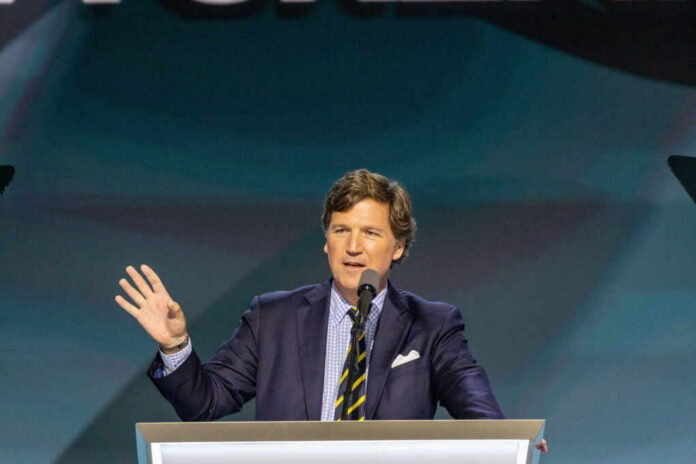
A Trump-era strike on Iran has now sparked something many conservatives never expected: a “treason” fight inside the Right that could reshape the MAGA coalition heading into 2028.
Story Snapshot
- U.S. operations against Iranian nuclear facilities triggered a sharp backlash from Tucker Carlson, who called the strikes “absolutely disgusting and evil.”
- A GOP lawmaker argued Carlson should be imprisoned if evidence ever shows he “worked with Iran,” escalating the dispute into legal and constitutional territory.
- Sen. Ted Cruz reignited a long-running feud with Carlson, calling him a “demagogue” and accusing him of spreading antisemitism amid the Iran debate.
- Constitutional tensions are growing as some lawmakers push for Congress to vote on war powers while the White House continues military pressure on Tehran.
What sparked the “treason” talk inside the GOP
President Trump’s second-term Iran posture moved from deterrence to direct action after “Operation Midnight Hammer” struck Iranian nuclear facilities in June 2025, followed by an escalation described as a “massive and ongoing operation” in early March 2026. Tucker Carlson responded with unusually harsh rhetoric, condemning the strikes and challenging the intelligence arguments used to justify them. That response set off a chain reaction: Republican critics began framing Carlson’s posture as something darker than dissent.
The core allegation has been conditional, but explosive: a GOP lawmaker said Carlson should be imprisoned if evidence emerges that he “worked with Iran.” No public evidence has been presented proving coordination between Carlson and the Iranian regime. What is documented is that Carlson interviewed Iranian President Masoud Pezeshkian in July 2025, and critics argue the regime leveraged that appearance as propaganda—an outcome that can happen even without cooperation.
Carlson vs. Cruz: the feud turns into a proxy war over “America First”
Sen. Ted Cruz reopened the conflict after Carlson mocked Cruz and others for relying on Israeli intelligence, dismissing them as “dumbos” on his show. Cruz responded by labeling Carlson a “demagogue” and alleging he was helping launder antisemitic themes. That clash matters because it’s bigger than personalities: it reflects two competing interpretations of “America First”—one emphasizing non-intervention and war skepticism, the other emphasizing strength, alliance credibility, and preventing Iran from reaching nuclear breakout capacity.
Other prominent voices have lined up around those poles. Rep. Marjorie Taylor Greene criticized Trump from the anti-war side, arguing the president “lied” about a no-foreign-wars pledge. Reps. Thomas Massie and Sen. Rand Paul have pushed the constitutional angle by demanding a congressional war vote, a familiar argument for voters who believe Washington too often drifts into conflict without clear authorization. The political consequence is a widening GOP split at the exact moment the public expects unity against a hostile regime.
Claims, counterclaims, and what can actually be verified
Critics of Carlson have not limited themselves to debating strategy; they’ve questioned credibility and motives. Commentary from the Rubin Report ecosystem argued Carlson “lies about literally everything,” pointing to a disputed story involving alleged Mossad activity in Qatar and Saudi Arabia that was publicly refuted by Qatar’s foreign ministry. Separately, the Foundation for Defense of Democracies said Carlson “has lost his way,” arguing his messaging aids Iranian propaganda. These arguments are opinions, but they are built around identifiable flashpoints rather than anonymous claims.
What remains uncertain—and important for constitutional-minded conservatives—is the leap from “misinformation” or “bad judgment” to “treason.” It describes condemnation and hypotheticals (“if he worked with Iran”), but it does not document a proven collaboration. That distinction matters because treason is one of the most serious accusations in American law, and reckless use of that label can become a political weapon. Conservatives who value due process should demand real evidence before endorsing criminal conclusions.
Why this matters: war powers, coalition unity, and the cost of a divided Right
The practical stakes are not confined to media drama. U.S. operations against Iran raise traditional questions about objectives, duration, and oversight—especially if Congress has not voted. At the same time, the propaganda battlefield is real: Iran benefits when American leaders and influential voices publicly fracture, and when debates over Israel, intelligence, and antisemitism consume the Right’s attention. The administration’s supporters argue deterrence requires clarity; critics argue clarity requires constitutional authorization and defined national interest.
For Trump voters over 40 who lived through decades of “forever war” messaging from both parties, the tension is familiar: defend the country without sliding into open-ended commitments. It shows that this fight is now being litigated as a loyalty test inside the GOP, with rhetoric escalating faster than verified facts. If the coalition wants to stay focused on inflation scars, border enforcement, and reversing progressive overreach, leaders will need to separate constitutional debate from personal vendettas.
Sources:
https://abcnews.com/US/trumps-iran-decision-sparks-backlash-tucker-carlson-maga/story?id=130622270
https://www.fdd.org/analysis/2026/03/11/tucker-carlson-has-lost-his-way/
https://www.jpost.com/opinion/article-889457