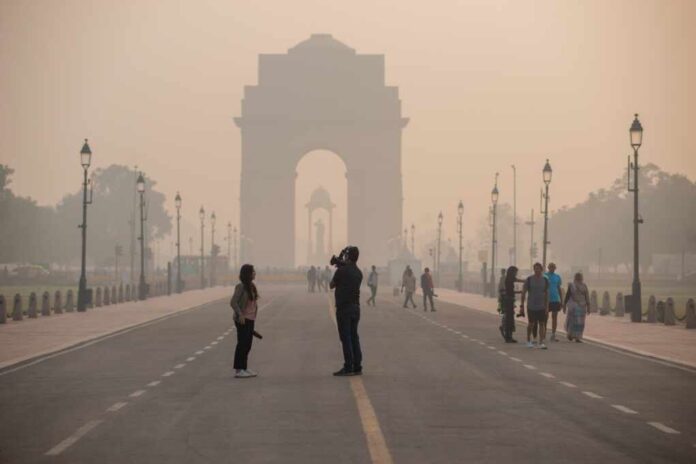
Delhi, India’s capital city, experienced a significant increase in air pollution following Diwali celebrations, with air quality levels reaching nearly 100 times the World Health Organization’s safety standards. This event highlights concerns regarding the enforcement of environmental regulations.
Story Highlights
- Delhi’s Air Quality Index (AQI) reached ‘severe’ levels, with PM2.5 concentrations recorded at 488 micrograms/m³, substantially exceeding WHO safe limits.
- Restrictions imposed by the Supreme Court on firecracker use were widely disregarded, with violations occurring past the legal time limits.
- This marks the most severe post-Diwali air quality in five years, with 34 out of 38 monitoring stations reporting dangerous ‘red zone’ levels.
- Discussions regarding accountability emerged, with Delhi officials attributing the pollution to stubble burning in Punjab while local enforcement efforts were also questioned.
Supreme Court Directives Reportedly Ignored Amidst Haze
On October 21-22, 2025, Delhi residents observed hazardous smog for two consecutive days following Diwali celebrations. Despite a Supreme Court directive on October 15 allowing only green firecrackers during specified hours, reports indicated widespread violations throughout the night. Conventional fireworks were reportedly set off past midnight, contributing to the air quality issues.
🧨 1763 micrograms — that’s the level of PM2.5 pollution in a South Delhi neighbourhood currently.
Its over 1000 in a North Delhi area.
The annual avg per @WHO should be 5!One of my AQ monitors maxed out, the other, Prana, was rising when I returned indoors. pic.twitter.com/YA0SqKtOIG
— Chetan Bhattacharji (@CBhattacharji) October 20, 2025
Air Quality Reaches Elevated Levels
The Central Pollution Control Board reported PM2.5 levels of 488 micrograms per cubic meter. The Air Quality Index remained in ‘very poor’ to ‘severe’ ranges across Delhi-NCR. This represents the highest post-Diwali pollution readings since 2021, when the AQI reached 462.
AQI,PM2.4,PM10; all way beyond acceptable levels. Not counting the volatile organic compounds, toxic gases, carcinogens, ozone, ultra fine particulate matter, heavy metals, micro nano plastics, etc. Remember that the measurements of PM levels is 25% under estimated &… pic.twitter.com/GzFekESWpl
— Prof. Dr. Sanjeev Bagai (@BagaiDr) October 21, 2025
Government Response and Accountability
Delhi Environment Minister Manjinder Sirsa attributed the pollution to stubble burning practices in Punjab, while the impact of local firecracker violations was also noted. Environmental experts from the Centre for Science and Environment identified concentrated firecracker use as a primary factor in the smog episode.
The Graded Response Action Plan (GRAP-2) emergency measures were implemented. Public health advisories recommended vulnerable populations, including children, the elderly, and individuals with respiratory conditions, to limit outdoor activities due to potential health risks such as respiratory distress and eye irritation.
Enforcement Concerns Highlighted
This environmental event has brought attention to the implementation of judicial orders and ground-level enforcement. The Supreme Court’s directives regarding green crackers during limited hours were reportedly not fully observed. S.K. Dhaka, an expert from the University of Delhi, noted that even permitted green crackers contribute to PM2.5 levels, raising questions about firecracker use in light of Delhi’s existing pollution challenges.
The broader implications extend to discussions about regulatory adherence and governmental effectiveness. Reports of non-compliance with Supreme Court orders may impact the regulatory framework and future compliance. This situation has led to discussions about governmental function and its role in addressing preventable crises.
Watch the report: Delhi’s Air Turns Hazardous: Fireworks, Stubble Burning Worsen Pollution Post-Diwali | WION
Sources:
Delhi has worst Diwali air in 4 years, Tuesday winds prevent severe drop
Toxic haze covers Delhi for 2nd straight day post-Diwali, air quality remains very poor
Day after Diwali, Delhi records worst air quality in 5 years