Taiwan’s president says he is “happy” to talk with Donald Trump just as Beijing warns Washington not to cross its red lines over the island’s future.
Story Snapshot
- Taiwan President Lai Ching-te has publicly signaled he is ready for direct talks with President Trump, a rare opening that could reshape the triangle between Washington, Taipei, and Beijing.
- Trump has said he intends to speak with Lai as he weighs a major new arms package for Taiwan, again putting America’s strength in the spotlight after years of weak-kneed diplomacy. [1]
- China calls Taiwan its “most important” sovereignty issue and has warned that mishandling it could create a “very dangerous situation,” raising the stakes for any Trump–Lai call.
- The episode revives debate over “strategic ambiguity” and whether it still protects peace — or simply encourages Beijing while tying America’s hands. [2]
Taiwan’s Leader Throws the Door Open to Trump
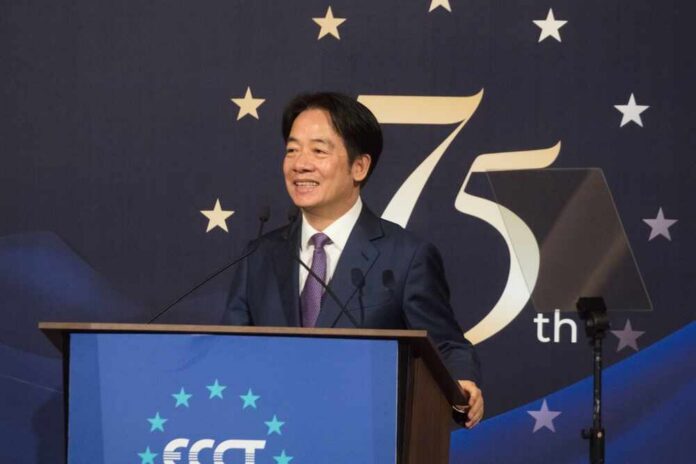
Taiwan’s Ministry of Foreign Affairs stated that President Lai Ching-te is open to talks with President Donald Trump “on related matters” while reaffirming a commitment to a stable status quo in the Taiwan Strait. That statement, echoed across financial and political newswires, confirms Lai is not shying away from direct contact with Washington’s commander in chief. For conservatives, it underscores how Indo-Pacific allies still look first to American strength, not to international bureaucrats, when Beijing turns up the pressure.
Reports from regional outlets say Taiwan framed Lai’s willingness as part of its ongoing communication with the United States, not as a stunt or one-off gesture. This aligns with Taipei’s long-standing push for deeper security ties with Washington, including more robust arms sales and joint planning. By making clear he would be “happy” to speak directly with Trump, Lai signals that Taiwan prefers frank conversation with a U.S. president who talks plainly about power, deterrence, and trade leverage rather than hiding behind diplomatic buzzwords.
Trump Weighs Arms Sales While Testing Beijing’s Nerves
President Trump told reporters that he is preparing to speak with Lai as part of his decision-making process on a significant new weapons package for Taiwan. [1] Earlier coverage described a multi-billion-dollar sale of advanced systems intended to strengthen the island’s defenses and keep the peace in the western Pacific. Trump said he would “work on that, the Taiwan problem,” signaling that he sees direct leader-to-leader talks as a useful tool, not an off-limits taboo inherited from the diplomatic class. [1]
This would not be the first time Trump has rattled the foreign policy establishment by picking up the phone to Taipei. In 2016, before his first term began, he spoke with then-President Tsai Ing-wen, the first direct contact of its kind since Washington shifted formal recognition to Beijing in 1979. That earlier call focused on politics, economics, and security in the Asia-Pacific, and it shattered a decades-old norm that American presidents should avoid such conversations. The current debate shows those old guardrails are being tested again — this time with Trump back in office and facing a more assertive China.
Beijing’s Red Lines and the Old Game of “Strategic Ambiguity”
Chinese state messaging has repeatedly cast Taiwan as the “most important issue” in United States–China relations and warned that mishandling it could create a “very dangerous situation.” Chinese leader Xi Jinping has described Taiwan independence and cross-strait peace as “irreconcilable,” making clear Beijing objects to anything that looks like recognition of Taiwan as a separate state. Direct Trump–Lai talks, even by phone, cut against that narrative, which is why Beijing’s diplomats and state media react so loudly whenever Washington edges closer to Taipei.
Since 1979, Washington’s posture has been built on “strategic ambiguity” — promising to help Taiwan defend itself without explicitly guaranteeing intervention, while maintaining unofficial ties with Taipei. [2] Any direct leader-to-leader engagement becomes a signal inside that carefully managed system. [2] Supporters argue ambiguity has preserved peace, but critics warn that China’s military buildup and threats have outgrown the old playbook. For many conservatives, the bigger danger is that ambiguity morphs into paralysis, inviting aggression while lawyers in Washington debate adjectives.
What This Means for American Strength and Conservative Priorities
Taiwan’s outreach and Trump’s willingness to talk reflect a simple fact: when push comes to shove, allies trust an America that acts like a sovereign nation, not a client of global consensus. Lai has publicly urged Washington to keep arms flowing to Taiwan to ensure “regional peace and security,” tying deterrence directly to continued United States support. [2] That message fits with conservative instincts that peace is secured by strength, clarity, and credible capability, not by appeasing authoritarian regimes.
✅
🚨 BREAKING: Taiwan says President Lai is open to talks with Donald Trump
— Taiwan said President Lai Ching-te would be willing to speak with Donald Trump, signaling possible future dialogue as tensions between China, Taiwan, and the United States continue to shape regional…— THE TRUT NEWS HUB (@mr_eon) May 21, 2026
For Americans watching from home, the coming days will test whether Trump’s second-term team can convert this moment into a clear, constitutional, America-first strategy. A conversation with Lai, backed by serious defensive firepower, would remind Beijing that free people are not bargaining chips in trade talks. [1] It would also signal that after years of drift and double-speak, the United States is again willing to speak plainly, stand by democratic partners, and put deterrence ahead of diplomatic theater.
Sources:
[1] Web – Trump says he’ll talk to Taiwan’s president amid arms deal … – …
[2] YouTube – Trump rattles ties with China after claiming he will speak …