A new bipartisan bill finally puts federal censors on notice: bully private companies into silencing Americans, and you can be sued personally.
Story Snapshot
- The bipartisan JAWBONE Act targets backdoor government censorship done through pressure on tech firms, broadcasters, and artificial intelligence platforms.
- The bill creates a clear right for citizens and companies to sue federal agencies and employees who push for censorship, even if the threat fails.
- It forces federal agencies to log and disclose many contacts with social media, artificial intelligence, and broadcasters so censorship cannot stay hidden.
- Support from groups across the spectrum, including civil libertarians, shows how serious the jawboning problem has become after years of abuse.
What The JAWBONE Act Would Do To Stop Backdoor Censorship
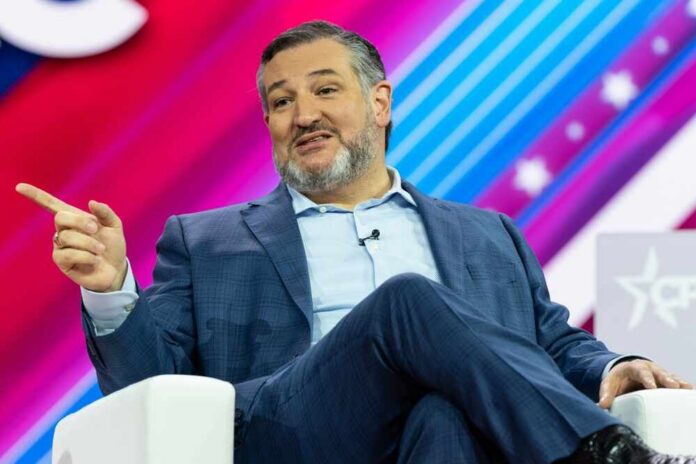
Senators Ted Cruz of Texas and Ron Wyden of Oregon have teamed up on the Justice Against Weaponized Bureaucratic Overreach to Networked Expression Act, better known as the JAWBONE Act, to crack down on federal “jawboning” — when officials lean on private companies to censor speech the government is not allowed to ban directly.[7] The bill creates a new legal right so Americans can sue any federal agency or employee who pressures social media platforms, broadcasters, or artificial intelligence services to silence lawful speech.[5]
Under the bill, people and companies hurt by jawboning can go to federal court for money damages and attorney fees, not just an order telling the government to stop in the future.[5] A key feature is that the threat itself breaks the law: the claim does not depend on whether the platform actually censors the content after the call or email from Washington.[7] This tackles the fear effect that many readers felt during the pandemic and election fights, when simply knowing the government was watching was enough to make platforms take posts down.
How The Bill Exposes Secret Government Pressure Campaigns
Beyond lawsuits, the JAWBONE Act forces sunlight onto the cozy, backroom relationship between federal bureaucrats and powerful platforms that control the digital public square.[7] Agencies would have to log certain contacts with social media companies, artificial intelligence providers, and broadcasters and send detailed summaries into a public portal, with full records available to Congress.[7] That means quiet “suggestions” from partisan staffers can no longer hide in private inboxes while citizens are left guessing why their posts vanished.
Transparency rules matter because past jawboning fights have been painfully hard to prove, with cases often thrown out when officials left office or records stayed sealed.[3] By making the government keep and share these communications, the bill gives judges and citizens a clearer paper trail tying censorship decisions back to real threats from regulators. Groups like the Foundation for Individual Rights and Expression say that alone would strongly deter future bullying and “backdoor censorship” by warning officials that their messages will not stay secret.[2]
Why Even Civil Libertarians And Tech Advocates Are Backing It
The JAWBONE Act has drawn rare praise from across the political and legal spectrum, which should catch the attention of any conservative who is used to being smeared as “extreme” for defending free speech. The American Civil Liberties Union, which has often clashed with conservatives, publicly endorsed the bill and said it would stop the federal government from coercing broadcasters, artificial intelligence firms, and online platforms into silencing speech.[10] The Knight First Amendment Institute and other watchdogs also say the bill builds real safeguards against government coercion of private speech gatekeepers.[4]
Senators Ted Cruz and Ron Wyden try to fight censorship with bipartisan JAWBONE Act, a proposed law that could fuel lawsuits against federal officials who try to coerce broadcasters or tech platforms into restricting speech. https://t.co/LR0LipGLuy
— Rilwan Balogun (@KPRC2Rilwan) June 13, 2026
Even pro‑market tech groups that usually resist new rules, such as NetChoice and Americans for Tax Reform, argue this measure is different because it aims at government abuse, not private moderation choices.[6] They stress that the bill gives “everyday Americans” and platforms a real pathway to defend their First Amendment rights in court when overreaching bureaucrats threaten investigations or regulation to get posts taken down.[6] That broad support hints at how deep the anger now runs over years of federal meddling in debates on elections, vaccines, crime, and more.
How The Bill Tries To Protect Both Free Speech And Law Enforcement
Supporters admit that not every contact between government and platforms is censorship. Sometimes law enforcement must warn a company about real criminal threats. To handle this, the JAWBONE Act includes exceptions for communications tied to lawful investigations or enforcement actions that do not violate the First Amendment.[7] A legal analysis notes this carveout is meant to let agencies do their jobs while still banning threats that use regulatory power to punish or chill lawful speech.[3]
That balance matters because the hardest cases are the gray areas, where a “request” from a regulator is backed by the power to launch audits, yank licenses, or block mergers. Free‑speech scholars warn that the most dangerous jawboning happens when officials hint at those powers instead of saying “do this or else” in plain words.[1] By treating attempts at coercion as violations on their own and by focusing courts on the official’s threats and authority, the bill gives judges a clearer test to spot when persuasion turns into unconstitutional pressure.[3]
Why This Fight Matters For Conservatives And The Country
For many conservative readers, jawboning is not an abstract law school idea; it is part of a pattern they have watched for years as big government and big tech team up to label mainstream views on faith, family, guns, and elections as “dangerous” or “misinformation.” Groups studying jawboning describe it as using unofficial tools — like private calls, emails, and public shaming — to achieve censorship the First Amendment would never allow in a statute.[15] That playbook lets unelected staffers do what Congress cannot openly vote for.
By putting real legal risk on federal employees and demanding a public record of their contacts with platforms, the JAWBONE Act attacks that backdoor method head‑on.[2] It will not solve every speech fight on the internet, and courts will still need to sort honest warnings from veiled threats. But for citizens who are tired of seeing Washington pick winners and losers in the marketplace of ideas, this bill offers something that has long been missing: a way to push back when government power is used to silence lawful voices instead of serving them.
Sources:
[1] Web – Bipartisan JAWBONE Act Targets Government Censorship Threats
[2] Web – Ted Cruz and Ron Wyden try to fight censorship with bipartisan …
[3] Web – Two senators offer a bipartisan solution to censorship by proxy
[4] Web – Cruz, Wyden Introduce Legislation to Guard First Amendment …
[5] Web – Knight Institute Endorses Bipartisan Bill to Protect Against …
[6] Web – ACLU Endorses Bipartisan JAWBONE Act To Protect Free Speech
[7] Web – The JAWBONE Act Would Finally Make Government Pay for Bullying …
[10] Web – The JAWBONE Act Would Create A Strong Remedy Against …
[15] Web – The JAWBONE Act: A Sensible Start for Addressing Coercive …