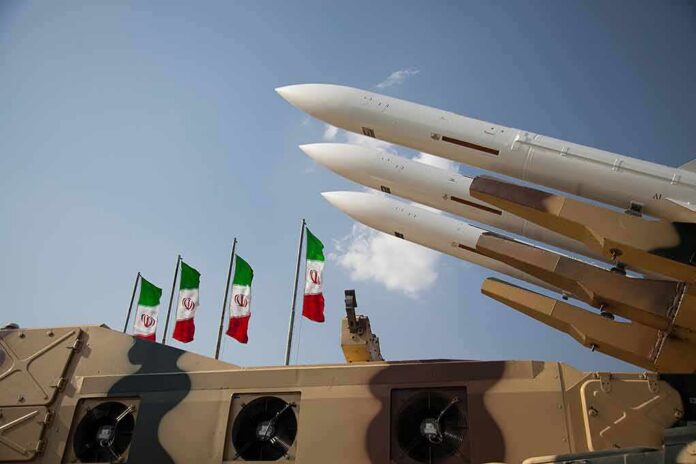
Jordan’s army says it shot down five Iranian missiles aimed at a region that also hosts a US‑linked base, exposing just how close Tehran is willing to bring war to American forces and allied territory.
Story Snapshot
- Jordan’s military reports intercepting and destroying five missiles launched from Iran over the Azraq area, with no casualties.
- Iran’s Revolutionary Guard claims it targeted a US command center and Muwaffaq Salti Air Base in Jordan as retaliation against America.
- Missile counts vary across incidents, but open sources show a clear pattern of repeated Iranian attacks crossing Jordanian airspace.
- The strikes highlight growing risks to US troops, regional allies, and the fragile stability that protects American interests abroad.
Jordan Says Five Iranian Missiles Shot Down Over Azraq
Jordanian air defense crews reported that five missiles launched from Iran were intercepted and destroyed late at night over the Azraq region in the Zarqa governorate. The army’s statement said the missiles were detected as they approached Jordanian airspace and were targeted by ground‑based systems before they could reach any populated areas. Debris fell to the ground after the intercepts, but officials stressed there were no injuries or property damage. Engineering teams moved in quickly to clear fragments and check for any unexploded pieces. For Jordanians on the ground, the main sign of danger was explosions and flashes in the sky, not impacts on homes or streets.
News outlets that follow regional security reported the same basic facts as Jordan’s army. Coverage said the missiles came from Iranian territory and were aimed toward the Azraq area, which sits roughly 80 kilometers east of Amman and is tied to the Muwaffaq Salti Air Base used by the United States and allies. The Jordanian military described the intercept as part of a wider effort to guard national airspace and keep any foreign power, including Iran, from using the kingdom as a battlefield. Officials repeated that message across statements, warning that Jordan “will not allow any violation of Jordanian airspace by any party.”
Iran Boasts Of Strikes On US Command Center And Base
While Jordan talked about successful defense, Iran’s Islamic Revolutionary Guard Corps told its own story. Iranian state outlets carried a Guard statement claiming that ballistic missiles were fired at a United States command center and the Muwaffaq Salti Air Base inside Jordan. The Guard framed the launches as payback for what it called “aggressive actions of the US military” in the wider war. Reports say Iran claimed it fired ten missiles at the Azraq base and nearby American facilities, even as Jordan spoke of intercepting smaller salvos. The Guard did not release radar data, strike footage, or debris photos that could prove it actually hit hardened US targets in Jordan.
For conservative readers, this matters because it shows Tehran openly targeting American forces and bragging about it on state media. Iran is not denying that it launched missiles. Instead, it is trying to sell the attack as a victory over US power, even while Jordan and US Central Command say incoming weapons were shot down. That gap between claims and hard evidence is common in modern wars, but the intent is clear. Iran wants to pressure US‑aligned governments, stir anger on the street, and push for American troops to leave bases that project strength against terror groups and hostile regimes.
Growing Pattern Of Iranian Missiles Crossing Jordan’s Skies
This five‑missile intercept is not a one‑off event. Over recent weeks, Jordan’s armed forces have reported multiple Iranian salvos aimed at its territory or nearby US‑linked sites. One official summary describes interceptions of eight missiles launched from Iran toward Jordanian territory, again with no casualties and with debris falling in empty areas. Another incident involved four missiles detected coming from Iran; three were shot down, and a fourth landed in an open area near the port city of Aqaba. In yet another case tied to wider Iranian strikes in the region, Jordanian defenses and allied systems intercepted thirteen ballistic missiles and dozens of drones, out of a total of forty‑nine threats entering the kingdom’s airspace.
BREAKING: Jordan intercepts five missiles launched from Iran, its military says, hours after the US shot down an Iranian missile barrage aimed at American forces and US and Saudi forces struck militias in Iraq.
— HIT.com (@HIT) July 29, 2026
Across these incidents, the numbers change but the pattern stays the same. Iran fires missiles; Jordan and allied forces, including American systems, scramble to stop them before they hit bases or cities. Footage from Zarqa and other areas shows interceptor trails lighting up the night sky as sirens sound and families rush indoors. Open reports say material damage has begun to appear in some strikes, even when casualties remain low. For US‑aligned countries, this is a warning. The more Iran tests these defenses, the higher the chance that one missile slips through and causes real loss of life or cripples key infrastructure that supports American troops and regional partners.
Why This Missile Clash Matters To Americans And Allies
For Americans who care about strong borders and a strong military, these events in Jordan are not distant noise. They show how hostile regimes, backed by state media and radical militias, are ready to push directly against US forces and conservative allies who stand up to terror, globalist pressure, and chaos. Every missile Iran launches at a US base or partner country is a hard reminder that peace comes from readiness, not wishful thinking. Jordan’s quick intercepts mean families there were spared this time, but the threat remains.
These clashes also expose how fragile truth can be in a war. Jordan says it intercepted five missiles in one attack, eight in another, and more in separate salvos. Iran claims ten missiles against the Azraq base, and sometimes hints at “direct hits,” yet does not back that up with verifiable data. Wire services repeat whichever official line they hear first. Social media then pushes dramatic clips, often without context or checking. That overload makes it hard for citizens to know what is really happening. For a free people who value clear facts and accountable government, this is one more reason to demand honest reporting and strong oversight of military action.
Sources:
insiderpaper.com, aljazeera.com, timesofisrael.com, npr.org, apnews.com, jpost.com, english.news.cn, reuters.com, youtube.com, facebook.com, economictimes.indiatimes.com, en.royanews.tv