President Trump closed a loophole that let Chinese companies rent American AI computing power overseas, just days before sitting down with Xi Jinping and Vladimir Putin in Shenzhen.
Story Snapshot
- New federal rule requires a U.S. government license before overseas data centers can supply large amounts of advanced chip computing power to China-based companies.
- The rule targets data centers in Singapore, Malaysia, Thailand and other Southeast Asian nations that Chinese firms have used to access banned chip technology remotely.
- China’s Commerce Ministry and Foreign Ministry accused Washington of “economic coercion” and threatened retaliation.
- President Trump heads into a historic three-way summit with Xi and Putin at the APEC gathering in Shenzhen with the chip fight hanging over the talks.
New Rule Closes Remote Access Loophole
The Commerce Department’s Bureau of Industry and Security has long warned that China tries to get advanced computing chips “through transshipment and diversion, and by accessing datacenters with advanced ICs” even when the chips never physically cross into Chinese territory. The new rule plugs that hole directly. It requires a U.S. license before any data center abroad can hand large volumes of advanced chip computing power to a company headquartered in China, Macau, or another country under a U.S. arms embargo.
This is not a new concern invented overnight. Commerce officials said back in 2023 that Chinese operations both inside and outside China and Macau were actively seeking advanced chips through transshipment, diversion, and overseas data-center access, and that earlier controls needed to be widened to stop it. President Trump’s administration is now following through on that warning with real teeth, instead of letting the gap sit open for Beijing to keep exploiting.
Why Southeast Asia Became the Target
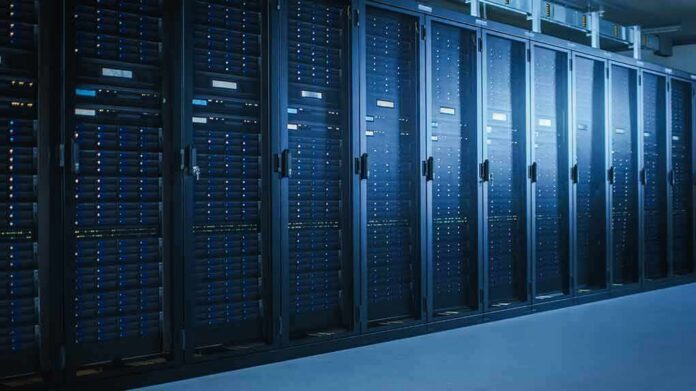
Chinese companies did not need to smuggle chips across their own border to train powerful AI models. They simply rented computing power from data centers in friendly third countries. Reuters reported that Chinese firms have used data centers across Southeast Asia to access the computing power they could not legally buy outright. The Associated Press confirmed the administration’s goal is blocking China from this kind of indirect access to American AI technology altogether.
The rule specifically names Singapore, Malaysia, and Thailand as locations where Chinese firms sought this workaround. These are not hostile nations, but their booming data-center industries had become a backdoor for Beijing. Commerce officials frame this as a national-security necessity, tying advanced chips to nuclear-weapons design, hypersonic missiles, and battlefield-effects analysis rather than ordinary commercial competition.
Beijing Fires Back With Threats
China’s Commerce Ministry did not take the move quietly. The ministry said the restrictions “violate market principles and international trade rules” and threaten the stability of global semiconductor supply chains, warning it would take countermeasures if Washington proceeds. A Chinese Foreign Ministry spokesperson went further, calling the move economic coercion and accusing Washington of stretching the definition of national security.
Those complaints ring hollow to anyone who has watched Beijing’s military-civil fusion strategy, which folds civilian AI research directly into weapons development. The BBC reported the rule will hit Chinese AI ambitions hard, since firms there have relied on rented foreign computing power to train their models for years. If that pipeline gets choked off, it is because Beijing built it to dodge American law in the first place, not because Washington is picking an unfair fight.
Trump Heads Into High-Stakes Summit
President Trump arrived in Manila before traveling on to Shenzhen for the APEC summit, where he is set to meet Xi and then join Putin for an unprecedented three-way sitdown. CNBC reported the data-center boom across the region now faces real risk as the rule tightens, since so much of it depended on Chinese demand for computing power. That gives Beijing an economic incentive to complain loudly at the summit table.
Xi Jinping broke protocol to greet Donald Trump on the tarmac in Shenzhen, opening the APEC summit on warm terms despite open disputes over AI chips.
Chinese heads of state have generally not gone to the airport to receive foreign guests in recent years. Xi met Trump on arrival…
— Tiberiade (@tiberiadex) November 19, 2026
None of this means the fight is settled. Commerce’s own guidance builds in licensing paths and allocation rules, including a requirement that authorized users keep at least three-quarters of controlled chips inside the United States or allied nations, so the policy is not a blanket ban. Still, President Trump walks into Shenzhen having already shown Beijing that America will not let a paperwork gap hand China a shortcut to military-grade AI power, no matter how the talks with Xi and Putin unfold.
Sources:
media.bis.gov, bis.gov, reuters.com, fresnobee.com, apnews.com, businesstoday.com.my, cnbc.com