

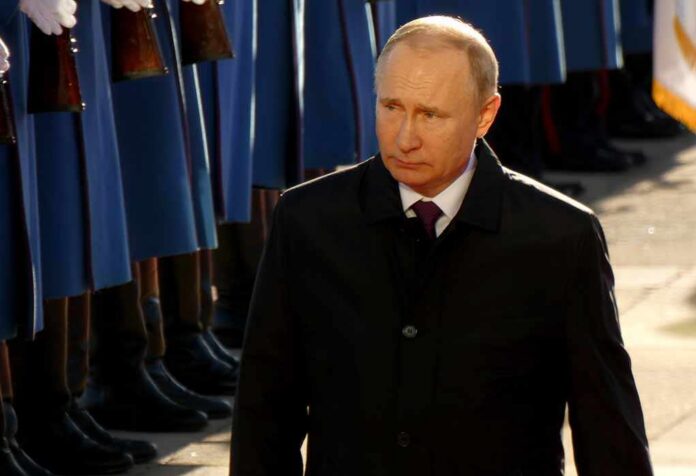
The House passed a sweeping Russia and Iran sanctions bill and sent it to President Trump for his signature.
Story Highlights
- The House approved the Lindsey O. Graham Sanctioning Russia and Iran Act and sent it to President Trump.
- The Senate passed the measure in August by a bipartisan 86-11 vote.
- The bill targets buyers of Russian oil and senior Russian figures to choke war funding.
- A narrow House rule vote set up the floor passage after days of maneuvering.
House Action Sends Sanctions Bill To President Trump
The House voted to pass the Lindsey O. Graham Sanctioning Russia and Iran Act and sent it to President Trump. Coverage described the measure as broad and focused on tightening the pressure on Moscow’s war machine and Tehran’s networks. The bill advanced after days of House debate and procedure. The step follows months of work in both chambers to assemble and refine penalties and enforcement tools. The final House action moves the bill to the Resolute Desk for a decision.
The Senate approved the sanctions package in August with a strong 86-11 bipartisan vote. That margin shows wide support to harden economic pressure on Russia after years of conflict in Ukraine. Lawmakers framed the bill as a direct response to ongoing aggression and to gaps in current sanctions. The Senate vote also honored the late Senator Lindsey Graham’s role as a chief champion of tougher penalties. The House action completes Congress’s push to deliver the bill to the president.
What The Bill Targets And How It Bites
The legislation seeks to hit Russia’s cash flow by going after buyers of Russian oil and by targeting senior Russian figures and sectors that support the war effort. Supporters say tighter energy sanctions can reduce revenue for weapons and logistics. The bill also aims to close known workarounds used to evade existing penalties. Stronger enforcement and secondary pressure on third-party buyers are designed to deter trade that props up Moscow’s economy and helps finance the invasion.
Backers argue sanctions can signal unity, raise costs, and reduce the resources Russia uses to wage war. Research shows sanctions often work best at constraining and signaling, and can have mixed results at forcing a full reversal of military goals. That record shaped lawmakers’ focus on enforcement and coalition pressure. This bill tries to sharpen those tools. It adds leverage against oil trade and key individuals while giving the executive branch clear authority to act and adjust as markets shift.
Key Steps And The Road To The Floor Vote
The House Rules Committee advanced the bill, clearing a path to a floor debate and final vote. A narrow procedural vote then allowed the chamber to consider Senate changes, with two Democrats joining Republicans to move it forward. Reporters tracked the tight timing as leaders weighed the best path to avoid a procedural snarl and keep the package intact. The coordinated House strategy preserved momentum that began with the Senate’s strong August vote.
IN NATIONAL NEWS — House approves sweeping Russia sanctions bill, sending it to Trump https://t.co/ZS6kAQNoYh
— KREX 5/Fox 4 (@KREX5_Fox4) September 17, 2026
Multiple outlets reported that the House would pass the measure and send it to President Trump, emphasizing its scope and bipartisan roots. The Senate’s August vote had already set the tone, with coverage noting the bill’s focus on oil buyers and elite targets inside Russia. Taken together, the congressional actions reflect a broad view that stronger economic tools are needed. The final step now rests with the president, who will weigh the bill’s penalties and enforcement design.
Why It Matters For American Interests
Lawmakers framed the bill as defending American security and economic stability by draining funds from hostile regimes. Tighter oil and financial sanctions seek to reduce the cash Russia and Iran use to threaten neighbors and challenge the United States. Sanctions alone rarely end wars, but they can limit resources and raise the price of aggression. This package aims to do that while signaling American resolve. The goal is less money for dictators, more safety for our troops and allies.
What Comes Next At The White House
The bill now awaits President Trump’s decision. The Senate’s lopsided vote and the House’s passage show Congress expects firm enforcement. Supporters say the bill gives the administration clear tools to target buyers, block evasion, and squeeze Russia’s war economy. If signed, agencies will move to draft rules, notify markets, and coordinate with partners abroad. Companies trading in energy will face a clear choice: stop funding aggression, or face real and rising costs.
Sources:
congress.gov, thehill.com, politico.com, rferl.org, cnbc.com