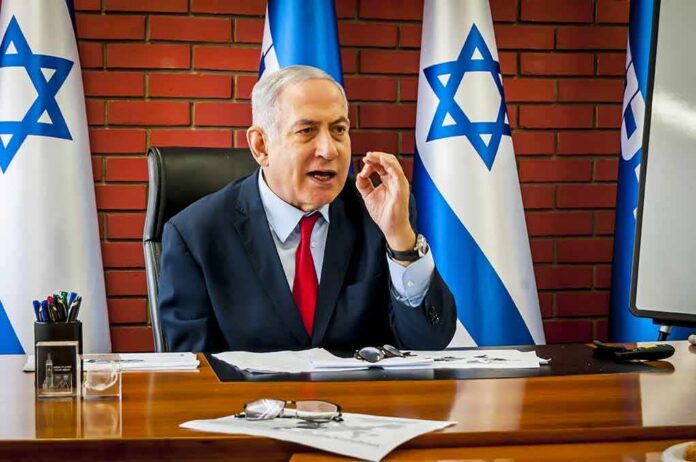
President Trump cut short his Camp David stay as Prime Minister Benjamin Netanyahu canceled a Texas stop and narrowed his U.S. visit to a brief New York swing for the United Nations address.
Story Highlights
- Trump left Camp David early and headed back to Washington the same day.
- Netanyahu scrapped a planned Texas stop and limited his U.S. trip to New York.
- Officials said a Trump-Netanyahu meeting was not scheduled due to timing.
- Reports tied the moves to a tight, fast-changing diplomatic calendar, not a joint event.
Trump’s Schedule Shift Back to Washington
White House pool reporters said President Trump cut short his weekend at Camp David and would return to the White House late Saturday. The White House updated his schedule and noted a Marine One return, which signaled an official change and not a rumor. No reason was given for the shift, but the move came as reporters tracked rising tension in the Middle East. The report focused on the confirmed travel change, not on motives or next steps.
Separate coverage echoed that the schedule change was announced in real time, not after the fact. Outlets that rely on pooled reporting described the updated itinerary and the same-day return window. That matters for readers who want clear facts, not spin. The adjustment showed the president was back at the White House for weekend management and briefings. That is common during fluid events that touch national security or diplomacy, even when officials do not spell out the reason.
Netanyahu Narrows U.S. Trip to New York Only
Israeli media reported that Prime Minister Benjamin Netanyahu canceled a Texas stop and would now fly into New York for his United Nations speech, then leave soon after. Coverage noted that his team alerted advance staff of the change. The trimmed visit pointed to a tight schedule rather than a broad tour. Israeli outlets and regional networks independently reported the same shift, which added weight to the revised plan and the rapid timetable.
Other reports matched the New York-only plan and said the prime minister would depart right after his address. One outlet highlighted that a planned meeting with a major tech figure was off the calendar. The picture that emerges is a leader with a focused mission and a narrow time window in the United States. The pattern is consistent with urgent diplomatic business during a tense period, when long public itineraries can give way to short, specific goals.
No Trump-Netanyahu Meeting on the Books
United States officials stated that a Trump-Netanyahu meeting was not scheduled because their timelines did not overlap. The Jerusalem Post cited a senior United States official who said Netanyahu would arrive after President Trump had already left New York. That detail supports the view that the two leaders were not set to meet during this visit, despite public interest and speculation common around United Nations week.
Additional regional reporting stressed that timing, not friction, explained the lack of a sit-down. Prior visits by Netanyahu to the United States under President Trump have often included meetings. This time, the calendar drove the outcome. Readers should separate firm travel facts from guesses about motive. The confirmed items are clear: an early presidential return to Washington, a narrowed Israeli visit to New York, and no bilateral meeting scheduled during this window.
What This Means for Security and Diplomacy
Fast schedule moves during Middle East flare-ups are normal. Presidents often shorten retreats to oversee response options with national security staff. Prime ministers often compress travel to focus on a single speech or key talks. These choices point to leaders who want flexibility as events shift by the hour. While some outlets linked Trump’s return to broad regional tension, officials did not provide a specific trigger. The record supports the travel facts, not a joint plan between the two leaders.
For American families who want stable fuel prices, safe borders, and peace through strength, these shifts show a government leaning into rapid decisions. A quick return to the White House means faster briefings and clearer command. A trimmed United Nations trip means fewer photo ops and more focus on core messages. That approach respects taxpayers and keeps attention on real threats, not on pageantry. It also avoids extended travel spending and reduces distractions from urgent work in Washington.
How to Read Tight-Lipped Scheduling
Major offices often release only what is needed on travel and meetings. That is standard for security and logistics. Pool notes and official updates are the best guides for what actually happened. In this case, those guides show two parallel decisions made in the same time frame. The facts support that President Trump came back to Washington early and that Prime Minister Netanyahu kept his United States time brief and centered on the United Nations speech.
One caveat appears in the coverage: officials did not give a reason for Trump’s schedule change. Even so, the confirmed updates are enough to explain the headlines. The key takeaway is simple. The president returned from Camp David to the White House the same day, and the Israeli leader cut his trip to a focused New York visit. No meeting was planned between them due to timing, and both sides moved on with their separate duties.
Sources:
thegatewaypundit.com, news.com.au, osint613.com, azernews.az, ua.news