A lawsuit that could redefine who controls America’s most powerful AI tools is forcing OpenAI’s leadership culture—and its promises to the public—into the harsh light of federal court.
Quick Take
- Elon Musk’s federal case against OpenAI is testing whether the organization drifted from a nonprofit “for humanity” mission into a profit-first enterprise.
- Reports describe a widening trust problem around CEO Sam Altman, including internal disputes, executive departures, and claims of misleading conduct that remain unproven in court.
- Trial testimony highlighted uncomfortable details for both sides, including Musk’s admission that xAI “distilled” OpenAI models in violation of terms of service.
- The dispute raises a larger question for voters: whether elite-run institutions can be trusted to self-govern transformative technologies without tighter accountability.
Why the OpenAI Trial Matters Beyond Silicon Valley
OpenAI’s courtroom fight in Oakland, California is more than a billionaire feud. The case pits OpenAI co-founder Elon Musk against the company now led by Sam Altman, and it focuses on whether OpenAI’s restructuring violated obligations tied to its original nonprofit purpose. Because OpenAI’s tools increasingly influence information, jobs, and national security work, the outcome matters to everyday Americans who already doubt that powerful institutions tell the truth when money is on the line.
At the center is a basic governance problem: OpenAI began in 2015 as a nonprofit aiming to develop advanced AI responsibly, but it later created a for-profit arm to raise capital. That pivot may be defensible as a practical way to fund computing and talent, yet it also created incentives critics say can overwhelm mission language. When that tension plays out inside one of the world’s most influential labs, it becomes a public question about accountability and limits.
Sam Altman’s Leadership Is Being Judged as Much as the Paperwork
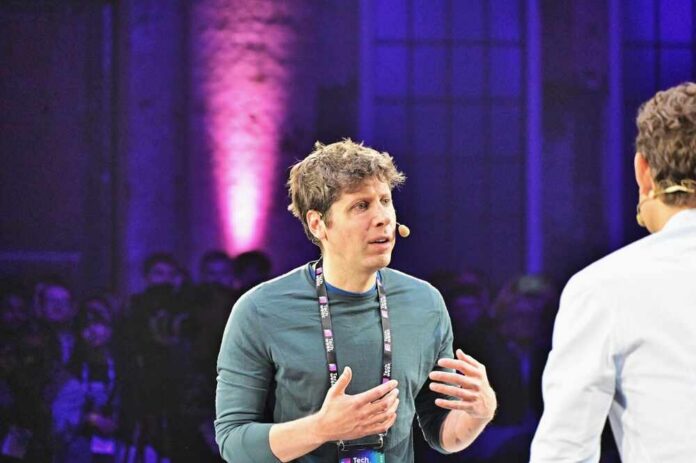
Coverage of the case portrays Altman as a rare consensus-builder in elite circles—effective at winning trust quickly—while also recounting allegations that he misled colleagues or blurred lines when pursuing growth. Those claims appear drawn from extensive reporting and internal-document summaries, but the trial has not produced a final verdict establishing them as fact. Still, the pattern described—mission promises paired with relentless commercialization—is exactly the kind of “elite double-speak” many voters across the political spectrum say they are tired of.
Personnel turmoil has amplified the scrutiny. Reports tied to the trial period describe senior executive exits occurring amid broader questions about strategy, spending, and governance. Separately, OpenAI’s competitive pressures have intensified as rivals such as Anthropic gain traction. None of that proves wrongdoing, but it does reinforce why trust is central here: when leadership turmoil and massive stakes collide, the public naturally wonders whether decisions are being made for safety and the national interest—or for valuation and market dominance.
Trial Testimony Put Musk and OpenAI Under the Microscope
Fortune’s reporting from the courtroom suggests the case has generated “more heat than light,” yet the details revealed are not trivial. Jurors heard testimony that Musk admitted xAI used “distillation” involving OpenAI models, a practice that violates OpenAI’s terms of service even if Musk argued it is common. The admission complicates Musk’s posture as a mission guardian, because it undercuts the idea that only OpenAI’s current leadership plays hardball when competitive advantage is at stake.
The same courtroom also described testimony involving OpenAI President Greg Brockman and an undisclosed investment connected to Cerebras during talks that evolved from acquisition discussions into a partnership. Even when such conflicts are not illegal, they fuel the broader perception that top tech leaders operate by a different rulebook than everyone else. For Americans who worry about “deep state” style networks of influence—public and private—that perception alone can further erode confidence in institutions.
National Security Contracts Add a New Layer of Public Concern
The trial also unfolds against controversy over OpenAI’s work with the U.S. government, including a 2026 contract involving classified AI uses. Government partnerships are not inherently sinister; national defense requires modern tools, and federal agencies will buy them from someone. But the politics change when a company markets itself as a safety-minded public benefactor while pursuing sensitive defense work and rapid commercialization. That combination invites skepticism from both libertarian-leaning conservatives and civil-liberties-focused liberals.
Sam Altman's Management Style Comes Under the Microscope At OpenAI Trial https://t.co/dU6ywuilH0
— Slashdot (@slashdot) May 7, 2026
For Washington, the bigger question is whether current law can keep up. A Republican-led federal government may be more wary of heavy-handed regulation that entrenches incumbents, yet it also faces pressure to ensure that AI power does not concentrate in a few corporate hands with minimal transparency. With no verdict yet, the safest conclusion is limited but important: the OpenAI case is a live demonstration that elite governance structures can fracture under pressure, and Americans may demand clearer guardrails.
Sources:
Sam Altman faces crisis of trust as OpenAI’s mission goes on trial
Musk’s court fight with OpenAI