Mexico’s “Mini-Pentagon” security hub is selling safety with drones and thousands of cameras—while a CIA controversy exposes how quickly public surveillance and sovereignty fights can collide.
Story Snapshot
- Chihuahua Gov. Maru Campos has expanded a tech-heavy public safety system that includes drones, mobile command trailers, and a surveillance network described as roughly 10,000 cameras.
- Revelations and accusations involving CIA participation in anti-cartel operations sparked protests and a political firestorm in Mexico’s Senate.
- Campos has denied wrongdoing and declined to appear before the Senate, keeping the dispute alive as operations continue.
- The clash highlights a broader dilemma: citizens want security from cartel violence but also fear mass surveillance, corruption, and foreign influence.
Chihuahua’s high-tech security push meets Mexico’s sovereignty politics
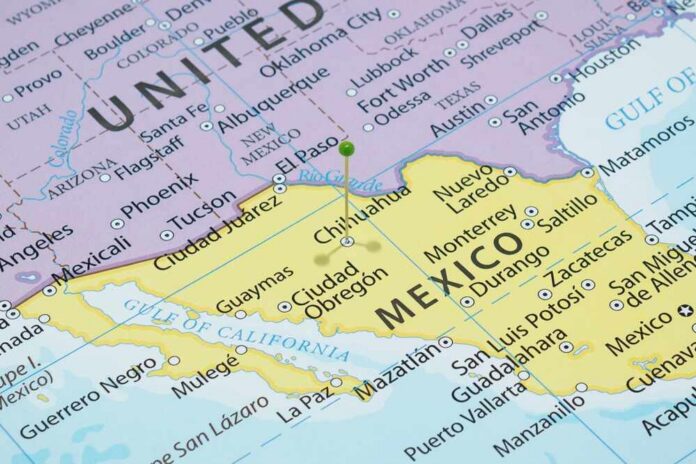
Chihuahua, a border state across from Texas, has battled cartel violence for years, creating pressure for measurable security results. Gov. María Eugenia “Maru” Campos, a PAN politician who took office in 2021, has built on her earlier city-level “Escudo Chihuahua” program by expanding surveillance and command capabilities at the state level. Reporting describes a central hub—nicknamed the “Mini-Pentagon”—coordinating drones, rapid-response resources, and a sprawling camera network.
Campos’s earlier effort as Chihuahua City mayor was credited with scaling camera coverage dramatically, integrating tools such as license-plate readers and an intelligence center tied to public and private feeds. The current iteration is framed as bigger: more cameras, more coordination, and mobile assets such as specialized trailers that can support operations away from fixed facilities. Supporters see a modern counter-cartel approach focused on speed and information. Critics worry the same tools can be misused.
CIA allegations trigger protests and a Senate showdown
Mexico’s political controversy ignited in 2026 after claims circulated that CIA personnel were involved in security operations in Chihuahua. Morena senators publicly escalated the rhetoric, including calling the alleged relationship “treason,” and sought answers about whether the arrangements violated Mexico’s constitutional limits on foreign security activity. Protest activity followed, with demonstrators demanding accountability and arguing that foreign participation crosses a line for national sovereignty—even if the target is cartel networks.
Campos has rejected the claims as unconstitutional wrongdoing, dismissing key accusations and portraying the controversy as politically driven. The dispute sharpened when she refused to appear before the Senate for questioning, fueling accusations from opponents and prolonging the standoff. Meanwhile, available reporting indicates the “Mini-Pentagon” style security operations have continued rather than being halted, leaving citizens with the practical reality of expanded surveillance and the unresolved reality of competing narratives.
What’s verified—and what remains murky about the “10,000 cameras” claim
The public record clearly supports Campos’s role in expanding surveillance infrastructure over multiple administrations, starting with a documented increase from a handful of cameras to hundreds during her mayoral tenure. The far larger number—often described as about 10,000 cameras—circulates in connection with the state-level buildout, but the research material also notes the difficulty of pinpointing a single definitive “visit” report that independently audits that figure. Readers should treat the headline number as broadly reported but not fully verified in one central, primary document here.
Why this matters beyond Chihuahua: security, privacy, and public trust
For Americans watching from across the border, the Chihuahua fight lands at the crossroads of three issues that keep resurfacing in U.S. politics: public safety, government power, and distrust of elite institutions. Many conservatives will instinctively sympathize with strong anti-cartel enforcement, especially in a border region that affects trafficking and migration flows. At the same time, mass camera networks and drone surveillance raise familiar civil-liberties questions—because tools built for criminals can later be turned on ordinary citizens.
Political incentives and the risk of permanent “emergency” government
Mexico’s PAN–Morena clash also resembles a pattern voters in the United States recognize: parties use crisis governance to score political wins while citizens get stuck choosing between bad options. Cartels create a real need for security capacity, but secrecy about foreign involvement and refusals to answer oversight questions deepen public suspicion. When governments normalize exceptional measures—surveillance expansion, opaque intelligence partnerships, and emergency-style operations—those measures tend to outlive the crisis that justified them.
Limited sourcing makes it hard to quantify outcomes such as homicide reductions, response-time improvements, or cost effectiveness for the current “Mini-Pentagon” configuration. What is clear is the trend line: more technology, more centralization, and more political conflict over who controls it and who watches the watchers. In a democratic society, the demand for security is legitimate, but so is the demand for transparent rules, jurisdictional clarity, and accountability when surveillance scales up.
Sources:
Maru Campos met with Omar García Harfuch over CIA agents in Chihuahua
Morena senators call Chihuahua governor’s alleged ties to CIA ‘treason’