The recent decision by the U.S. Department of Justice (DOJ) not to pursue criminal charges against Boeing for the fatal 737 Max crashes has ignited a firestorm of controversy. While Boeing avoids corporate prosecution through a $2.5 billion deferred prosecution agreement, the victims’ families and the public are left demanding justice, reigniting the critical debate over corporate accountability and the effectiveness of such settlements.
Story Highlights
- The DOJ decided not to pursue criminal charges against Boeing for the 737 Max crashes.
- Victims’ families have expressed outrage over the DOJ’s decision.
- Deferred prosecution agreements (DPAs) have sparked debate over corporate accountability.
- There are ongoing calls for legislative reform and stricter aviation oversight.
DOJ’s Decision and Public Outcry
The U.S. Department of Justice (DOJ) announced in October 2025 that it would not pursue criminal charges against Boeing for the tragic crashes of its 737 Max aircraft, which resulted in 346 fatalities in 2018 and 2019. The decision came despite extensive public and familial pressure for accountability. The DOJ cited insufficient evidence of willful criminal misconduct by Boeing, a stance that has sparked significant outrage among victims’ families and the public.
Criminal case against Boeing over deadly 737 Max plane crashes is dismissed by a US judge https://t.co/xlJjUktbU7 pic.twitter.com/pDHq3RUMfk
— Broomfield Enterprise (@bfld_enterprise) November 6, 2025
Deferred Prosecution Agreements and Accountability
Boeing reached a $2.5 billion deferred prosecution agreement (DPA) with the DOJ in January 2021, allowing the company to avoid criminal charges. This agreement has reignited debates about the effectiveness of DPAs in ensuring corporate accountability. Critics argue that such settlements often allow corporations to evade substantial penalties, undermining public trust in the justice system. The use of DPAs in high-profile cases draws attention to the need for reform in how corporate crimes are prosecuted.
Impact on Victims’ Families and Legislative Calls
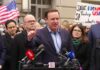
Victims’ families have expressed profound disappointment and a sense of injustice over the DOJ’s decision. Their advocacy has highlighted the emotional toll and the demand for transparency and accountability. In response, there are growing calls for legislative reform to strengthen oversight and change how corporate liability is addressed. Congress is considering measures to reform the use of DPAs in corporate crime cases, aiming to ensure that justice is served, and similar tragedies are prevented in the future.
The aviation industry continues to feel the impact of these developments, with increased scrutiny and calls for stricter regulatory measures. The 737 Max has returned to service under enhanced oversight, reflecting ongoing efforts to restore public confidence in air travel safety.
Watch the report: Boeing will not face criminal charges over two deadly 73 Max Jetliner crashes
Sources:
Boeing criminal case linked to deadly 737 crashes dropped
US judge approves Trump administration’s decision to drop Boeing criminal case | Reuters
Judge dismisses Boeing criminal case over 737 Max crashes at DOJ request despite skepticism
Boeing won’t face criminal charge over 737 Max crashes that killed hundreds of people