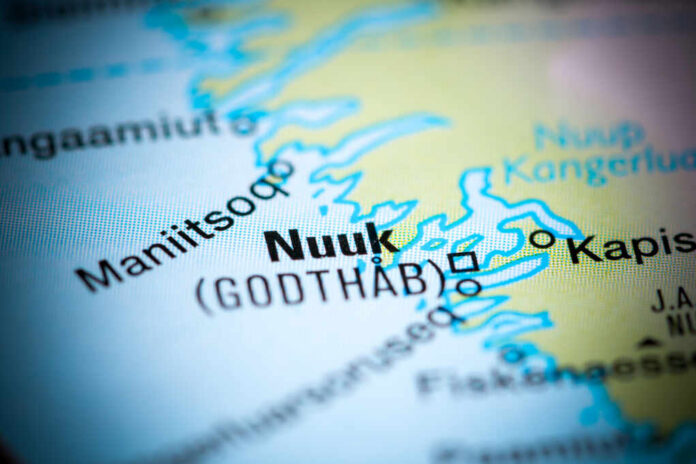
While President Trump works to secure America’s strategic interests in the Arctic, NATO allies Canada and France just opened new consulates in Greenland’s capital.
Story Snapshot
- Canada and France simultaneously opened consulates in Nuuk, Greenland on February 6, 2026, amid U.S. efforts to acquire the territory
- The openings followed Trump’s January 2026 tariff threats against Denmark and France, which were paused after NATO negotiations
- Canadian Foreign Minister Anita Anand and Governor General Mary Simon led a 19-member Inuit delegation emphasizing Indigenous self-determination
- Both nations claim their consulate plans predate Trump’s acquisition push, though the timing appears strategically coordinated
Allied Diplomatic Push Against U.S. Arctic Strategy
Canada raised its flag over a new consulate in Nuuk on February 6, 2026, while France dispatched its first Consul General Jean-Noël Poirier to establish a diplomatic presence in Greenland’s capital. Canadian Foreign Minister Anita Anand declared that Canada stands firmly behind Greenland’s right to self-determination, emphasizing Arctic Indigenous governance. Governor General Mary Simon, Canada’s first Inuk leader in that role, delivered speeches celebrating Greenland’s sovereignty while leading a delegation of 19 Canadian Inuit representatives. The coordinated openings sent an unmistakable message to Washington about NATO allies’ willingness to counter American territorial ambitions in the resource-rich Arctic.
Watch:
https://www.youtube.com/watch?v=Q7gsBYTxPTg
Trump’s Greenland Acquisition Efforts Meet Resistance
President Trump renewed his push to acquire Greenland in January 2026, threatening 10-25% tariffs on Denmark, France, and six other European countries unless they facilitated U.S. control of the semi-autonomous Danish territory. The aggressive approach marked an escalation from Trump’s 2019 purchase proposal, which Denmark rejected outright. Trump paused the tariff threats following NATO talks with Secretary-General Mark Rutte, resulting in a vague “framework” deal for Arctic security cooperation. Vice President JD Vance and Secretary of State Marco Rubio established a working group with Danish and Greenlandic foreign ministers to address Arctic security concerns, though specific details remain undisclosed.
Strategic Arctic Territory at Center of Great Power Competition
Greenland’s massive landmass spans one-fourth the size of the United States and holds immense strategic value due to rare earth minerals, emerging shipping routes from melting ice, and military positioning against Russia and China. The territory has maintained semi-autonomous status under Danish sovereignty since 1953, with expanded self-rule granted in 2009. The U.S. maintains a significant military presence at Thule Air Base, demonstrating long-standing American security interests in the region. French President Emmanuel Macron announced his country’s consulate plans in June 2025, while Canada pledged its Nuuk presence in 2024 as part of a broader Arctic strategy, both officially predating Trump’s latest acquisition campaign.
The consulate openings highlight a fundamental tension between American national security interests and European multilateral approaches to Arctic governance. While Trump administration officials argue Denmark lacks the defense capacity to adequately protect Greenland from foreign threats, allied nations frame their diplomatic expansion as supporting Indigenous self-determination rather than opposing legitimate U.S. security concerns. Inuit leader Natan Obed acknowledged living through a scary time while expressing optimism about global solidarity for Greenland’s cultural sovereignty.
Long-Term Implications for Arctic Sovereignty
The coordinated diplomatic moves by Canada and France establish a stronger European and North American allied foothold in Greenland, potentially complicating future U.S. efforts to enhance security arrangements or resource access. Short-term benefits for Denmark and Greenland include bolstered morale and visible international support against perceived American pressure. Long-term effects shift Arctic governance toward multilateral frameworks emphasizing Indigenous rights and allied cooperation over bilateral U.S.-Denmark negotiations. Economic opportunities expand for France through cultural, scientific, and mineral development projects, while Canada strengthens pan-Arctic Inuit connections. The situation tests whether America’s NATO allies will prioritize virtue signaling about self-determination over recognizing legitimate U.S. security requirements in an increasingly contested Arctic region facing Russian and Chinese encroachment.
As technical talks continue between U.S., Danish, and Greenlandic officials on Arctic security frameworks, the fundamental question remains whether allied nations genuinely seek cooperative solutions or merely aim to obstruct American strategic positioning. The Trump administration’s willingness to pause tariff threats demonstrates flexibility in pursuit of negotiated outcomes, yet the rushed timing of allied consulate openings suggests coordinated diplomatic interference. For Americans concerned about national security and great power competition, the spectacle of NATO allies racing to plant flags in Greenland while Chinese and Russian influence grows throughout the Arctic reveals troubling priorities that place symbolic gestures above hard strategic realities.
Sources:
France, Canada open consulates amid backlash to U.S. Greenland bid – Xinhua
Canada, France opening new consulates in Greenland’s capital amid Trump pressure – Fox News
Canada, France open consulates in Greenland following tensions over U.S. push for control – Los Angeles Times