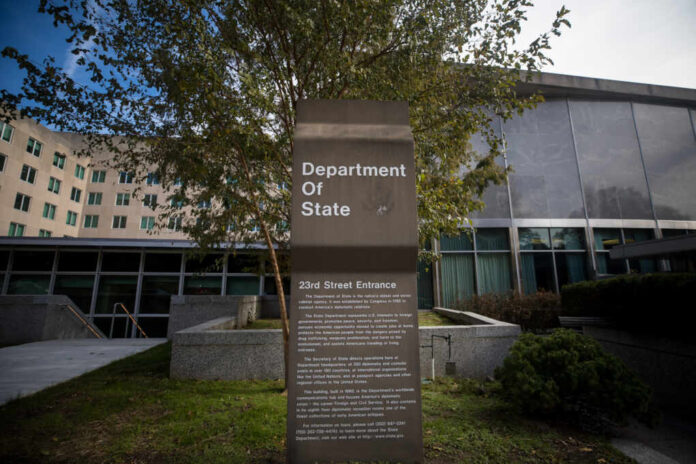
A major policy shift is fundamentally reshaping U.S. immigration, granting consular officers unprecedented power to deny immigrant visas based on chronic health conditions like obesity and diabetes. Issued in November 2025, the new State Department guidance requires applicants to prove significant financial capacity to cover all future medical costs, thereby avoiding being labeled a “public charge.”
Story Highlights
- New State Department guidance allows denial of visas for applicants with chronic illnesses, including obesity and diabetes.
- Applicants must now prove financial capacity to avoid being labeled a potential “public charge.”
- This policy shift marks the broadest health-based visa exclusion in U.S. history.
- Legal authorities warn of increased denials and potential discrimination, fueling heated public and political debate.
Trump Administration Expands Health-Based Visa Denials
In November 2025, the State Department issued new guidance expanding health-based grounds for immigrant visa denial. Under the directive, consular officers are instructed to scrutinize applicants for chronic conditions such as obesity, diabetes, cardiovascular disease, and mental health issues. If officers determine that an applicant—or their dependents—may become a “public charge” due to anticipated medical costs, they are authorized to deny the visa. The policy’s financial assessment requires proof of ability to pay for future care, making self-sufficiency essential for entry. This marks a dramatic shift from previous practices, which focused mainly on communicable diseases and vaccination status.
The inclusion of common, non-communicable conditions like obesity and diabetes is unprecedented in U.S. immigration law. Historically, health-related visa denials were limited to contagious diseases of public health significance, such as tuberculosis, and to applicants lacking mandatory vaccinations. The “public charge” doctrine—allowing denial of entry to those likely to depend on government assistance—has existed for more than a century but was interpreted narrowly. This new approach reflects the Trump administration’s commitment to reducing perceived burdens on public resources and tightening immigration controls, aligning with conservative priorities of fiscal responsibility and limited government spending.
"As it should be!!! State Department to allow denial of immigrant visas to those with health issues, including obesity" – New York Post #SmartNews https://t.co/4Gz0dQeSCv
— Gene Melius (@gene_melius2) November 11, 2025
Financial Burden and Self-Sufficiency Requirements
Applicants and their families now face significant new hurdles. The guidance requires detailed financial documentation to prove they can cover long-term, expensive health care without relying on public programs. Consular officers are granted substantial discretion, with the authority to deny visas based on anticipated future medical expenses. This process places the burden squarely on families—especially those from countries with high rates of chronic illness. Critics argue that the policy risks arbitrary or discriminatory decision-making, potentially excluding otherwise qualified immigrants and undermining family reunification.
Legal advocacy groups, including the Catholic Legal Immigration Network, have raised concerns about fairness and due process. Some legal analysts warn that consular discretion could result in inconsistent application of the rules, especially given the broad definition of “chronic condition.” Healthcare professionals note that targeting common issues like obesity could unfairly penalize large segments of the global population, while supporters argue that the measure protects U.S. taxpayers from future public health costs and reinforces responsible immigration.
Impact on Families, the Economy, and U.S. Values
In the short term, the policy is expected to increase the number of visa denials for applicants with chronic health conditions, directly affecting immigrant families seeking to reunite in the United States. U.S. employers and sponsors may encounter new obstacles as the applicant pool shrinks, and communities with higher rates of obesity or diabetes could see reduced immigration. Longer-term effects include decreased workforce diversity and possible exacerbation of health disparities. While some believe the policy could reduce public healthcare expenditures, others warn it may stigmatize vulnerable populations and create new social divides.
The policy’s implementation has already generated heated debate. Advocacy groups prepare to challenge denials in court, and media coverage continues to highlight the tension between protecting American resources and upholding humanitarian values. As the Trump administration enforces these changes, the broader trend toward stricter immigration controls and greater emphasis on individual responsibility resonates with many conservative voters. Yet the policy’s far-reaching implications—touching economic, social, and family life—ensure that the controversy will remain front and center in public discussion.
Watch the report: Trump Adds New Health Criteria for Visa Approval
Sources:
Immigrants with health conditions may be denied visas under new Trump administration guidance – CBS News
New Trump directive could deny more visas based on health conditions, finances
State Department to allow denial of immigrant visas to those with health issues, including obesity
Overweight foreigners seeking visas may be rejected to save healthcare costs, taxpayer expense