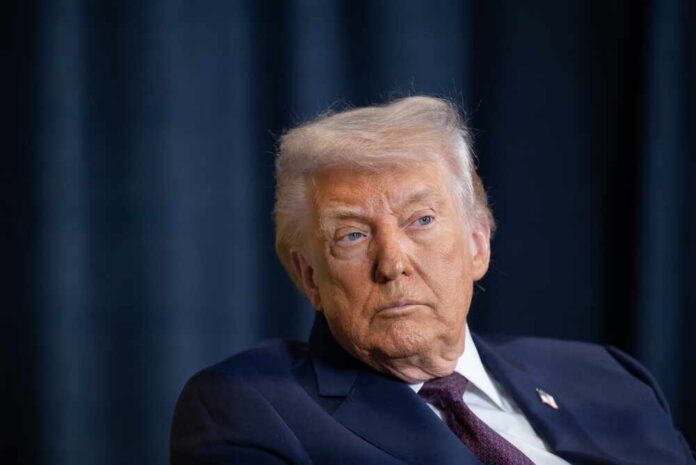
President Trump pledges to confront Chinese President Xi Jinping over the imprisonment of pro-democracy media tycoon Jimmy Lai, raising questions about whether America’s human rights stand will finally translate into action or remain empty rhetoric against Beijing’s authoritarian grip.
Story Snapshot
- Trump commits to raising Jimmy Lai’s case during May 14-15 Beijing summit, marking his second direct appeal to Xi for the jailed publisher’s release.
- Over 100 bipartisan lawmakers urged Trump to press for Lai’s humanitarian release, citing the 77-year-old’s prolonged detention under Hong Kong’s National Security Law since 2020.
- Press freedom advocates welcome the pledge but demand concrete commitments, noting Beijing’s near-perfect conviction rate under its sweeping security crackdown.
- The summit will also address Taiwan arms sales and trade tensions, blending human rights concerns with strategic flashpoints that define U.S.-China rivalry.
Trump Renews Advocacy for Imprisoned Publisher
President Trump announced on May 11, 2026, that he would discuss Jimmy Lai’s imprisonment with Chinese President Xi Jinping during their scheduled summit in Beijing. Speaking to reporters in the Oval Office, Trump stated he would like to see Lai released and promised to bring up the case directly. This marks Trump’s second known intervention on Lai’s behalf, following an October 2025 meeting with Xi in South Korea. The 77-year-old founder of Apple Daily, a now-shuttered pro-democracy Hong Kong tabloid, has been detained without bail since August 2020 under charges of collusion with foreign forces and sedition. His trial under Hong Kong’s National Security Law has dragged on since December 2023 with no verdict in sight.
Bipartisan Pressure Mounts on White House
Trump’s commitment follows a May 8 letter from more than 100 bipartisan U.S. lawmakers urging him to prioritize Lai’s humanitarian release during the summit. The letter highlighted concerns over Lai’s health and the excessive duration of his detention, framing his case as a test of American resolve on press freedom. The Committee to Protect Journalists issued a statement on May 12 praising Trump’s pledge but insisting it must be tied to concrete commitments rather than symbolic gestures. These demands reflect growing frustration among both conservative and liberal observers who see Beijing’s crackdown on Hong Kong dissent as emblematic of authoritarian overreach that the U.S. has failed to meaningfully counter despite repeated statements of concern.
Beijing’s National Security Law Silences Dissent
Jimmy Lai’s prosecution stems from Hong Kong’s National Security Law, imposed by Beijing in June 2020 following mass pro-democracy protests in 2019. The law criminalizes acts deemed as secession, subversion, terrorism, or collusion with foreign forces, carrying penalties up to life imprisonment. Lai was arrested under this legislation and Apple Daily was forced to close in 2021 after authorities froze its assets and arrested key staff. The law’s enforcement has achieved a near-perfect conviction rate, effectively silencing dissent and dismantling Hong Kong’s once-vibrant civil society. For millions of Americans who watched Hong Kong’s freedoms erode, Lai represents a living symbol of how Beijing steamrolls over promises of autonomy—a reality that resonates whether one prioritizes human rights or views China as a strategic threat.
Summit Balances Human Rights and Strategic Interests
The Trump-Xi summit on May 14-15 will address multiple contentious issues beyond Lai’s case, including U.S. arms sales to Taiwan and bilateral trade disputes worth over $500 billion annually. Trump indicated Xi would likely initiate discussions on Taiwan, acknowledging the island’s status as Beijing’s top security concern. This interweaving of human rights and strategic interests creates a delicate balancing act: pressing too hard on Lai risks Chinese retaliation on trade or Taiwan, yet failing to secure results undermines Trump’s credibility with conservatives and press freedom advocates. Analysts note that while Lai’s release remains unlikely given Beijing’s track record, any concession would mark a rare victory for U.S. diplomatic pressure and could set a precedent for linking human rights to broader negotiations with authoritarian regimes.
Trump says he will discuss Jimmy Lai in meeting with Xi Jinping – LifeSite https://t.co/fJxLk6gBBe
— ☈hino1989🌈🇺🇸🍑🌹 (@F4SuperBugfan89) May 12, 2026
The outcome of Trump’s appeal will reveal whether America’s stated commitment to liberty abroad carries weight or merely serves as talking points for a government elite more concerned with maintaining the status quo than confronting the hard realities of great-power competition. For everyday Americans tired of watching their leaders fail to deliver results, this summit offers a clear test: can Trump extract meaningful change from Xi, or will Jimmy Lai remain another casualty of a system that prioritizes political convenience over principle?
Sources:
U.S. lawmakers urge Trump to press China’s president on Jimmy Lai case – EWTN News
Trump Compares Jailed Democracy Activist to His Own Political Nemesis – The Daily Beast