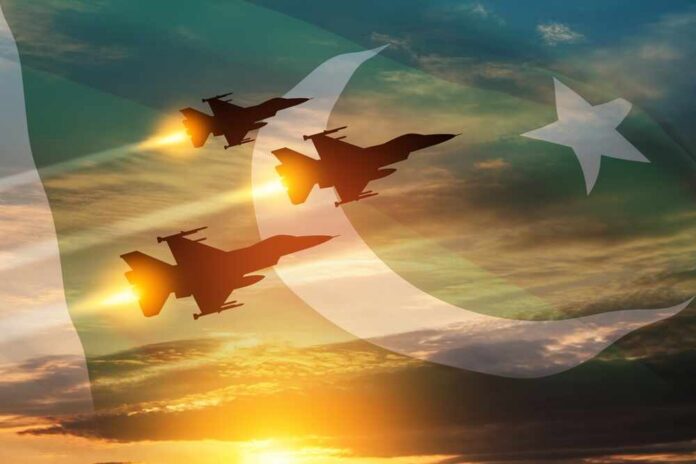
Pakistan’s reported surge of troops and fighter jets into Saudi Arabia raises fresh questions about Gulf stability, Iranian aggression, and what it means for America’s security and energy prices.
Story Snapshot
- Reports say Pakistan sent about 8,000 troops, a jet squadron, drones, and air defenses to Saudi Arabia under a 2025 mutual defense pact [1][4].
- The pact, signed on September 17, 2025, commits each country to treat aggression against one as against both [2][3].
- Saudi officials reportedly acknowledged Pakistani forces’ arrival; Pakistan’s public disclosures remain limited [3].
- Analysts confirm the pact formalizes a decades-long, real security partnership, not mere symbolism [5][6].
Confirmed Pact, Reported Deployment Scale, And What Is Known
Reuters-derived reporting summarized by multiple outlets says Pakistan deployed roughly 8,000 troops, a squadron of JF-17 fighter jets, drones, and air-defense systems to Saudi Arabia under a mutual defense pact [1][4]. Public records show the Strategic Mutual Defence Agreement was signed in Riyadh on September 17, 2025, by Mohammed bin Salman and Shehbaz Sharif [2]. Drop Site cites a joint statement that “any aggression against either country shall be considered an aggression against both,” framing the pact’s deterrent signal [3].
Drop Site reports the Saudi Ministry of Defence announced Pakistan had sent forces, including fighter jets, to Saudi Arabia under the pact [3]. The same reporting notes open-source intelligence monitors observed Pakistani airlifts of military equipment into the kingdom in December and January, suggesting preparations preceded public acknowledgment [3]. While these accounts present a coherent timeline, Pakistan’s government has not released matching unit rosters or detailed orders, leaving precise force composition and basing opaque in the public record [1][3][4].
Combat-Capable Assets Versus Advisory Presence
Broadcast summaries characterize the deployment as combat-capable, not just trainers, citing JF-17 jets, drones, and HQ-9 air-defense systems alongside thousands of troops [1]. That description aligns with the pact’s mutual-defense framing and Saudi Arabia’s need for credible air defense. However, none of the available sources publish unit designations, rules of engagement, or basing specifics, so the operational status of each asset—whether on rotation, alert duty, or training cycles—remains unverified in open materials [1][3][4]. Readers should treat exact numbers and posture as reported but not officially enumerated.
Expert analysis underscores that this cooperation is not a bolt from the blue. Georgetown’s interview with Dr. F. Gregory Gause explains the agreement formalizes a long-standing Saudi-Pakistani security relationship spanning decades [5][6]. That history suggests capacity for real operational roles when requested, even as today’s disclosures stay limited. The continuity also tempers sensational narratives: reinforcement may be significant without being unprecedented, given prior Pakistani troops previously stationed for training and support in the kingdom [5][6].
Regional Tensions, Iran Risk, And U.S. Interests
Media accounts link the deployment to heightened regional tensions and the possibility of Iranian attacks on Saudi targets, framing the move as deterrence during a volatile period [1][4]. The sources, however, do not quote an official mission statement explicitly labeling the deployment as anti-Iran; that inference rests on regional context rather than published operational language [1][3][4]. Such ambiguity invites competing narratives about whether this is defensive reassurance, escalation, or routine continuity under a newly codified pact.
Pakistan, which is mediating tensions between Iran and the United States, has deployed 8,000 troops, fighter jets, drones and an air defense system to Saudi Arabia under a mutual defense pact between the two countries.
Reuters reported that the deployment includes 16 JF-17… pic.twitter.com/EliMJ6TYD6
— TOLOnews English (@TOLONewsEnglish) May 19, 2026
For Americans watching energy prices, shipping security, and broader deterrence, the implications are direct. A stronger Saudi air-defense picture backed by Pakistani manpower and jets could stabilize critical infrastructure if Iran or its proxies threaten Gulf assets. But opacity from Riyadh and Islamabad complicates risk assessment. Without treaty annexes, unit rosters, or formal rules of engagement, markets and policymakers must read signals indirectly—through reported airlifts, Saudi statements relayed by media, and expert context—instead of clear, on-the-record briefings [1][3][5].
What Conservatives Should Watch Next
Congress and the administration should seek clarity on the pact’s triggers, geographic scope, and any request mechanisms that could draw partners into a wider confrontation. Lawmakers should press for the text of the September 17, 2025 agreement and any annexes, along with confirmations of actual deployed units and missions. Transparency helps prevent miscalculation, protects energy security, and keeps American taxpayers insulated from open-ended commitments abroad while ensuring our allies shoulder their defense burdens responsibly [2][3][5][6].
Bottom line for readers: credible reports point to a real Pakistani reinforcement in Saudi Arabia under a formal mutual defense pact, with fighter aircraft and air defenses indicating more than symbolic presence. Yet critical operational details remain undisclosed. Prudence demands vigilance—support genuine deterrence against aggressive regimes, insist on transparency from partners, and keep America’s focus on secure borders, affordable energy, and a strong but carefully defined posture that deters war rather than drifts into it [1][2][3][4][5][6].
Sources:
[1] YouTube – 8000 Pakistani Troops & JF-17 Jets Deployed In Saudi Arabia
[3] Web – Leaked Documents Reveal Details of the Secret Saudi Arabia …
[4] YouTube – Pakistan Sends Troops To Saudi Arabia
[5] Web – The Saudi-Pakistani Defense Pact and U.S. Force Posture in the Gulf
[6] Web – Understanding the Pakistan–Saudi Defense Agreement