China quietly opened the communist leadership’s inner sanctum to Donald Trump, and the way Xi framed that rare Zhongnanhai garden tour says a lot about who now sets the tone in U.S.–China relations.
Story Snapshot
- Xi Jinping led Trump on a rare walk through Zhongnanhai, the tightly controlled compound where China’s communist leaders live and work.
- Xi explicitly cast the tour as payback for Trump’s hospitality at Mar-a-Lago, signaling personal respect and diplomatic reciprocity.
- Ancient trees, historic gardens, and a reported gift of rose seeds turned the stroll into a carefully staged message about tradition and power.
- Media critics focused on gossip and “bonkers” soundbites, downplaying how Trump used personal diplomacy to reset a tense relationship.
Xi Opens the Communist Leadership Compound to Trump
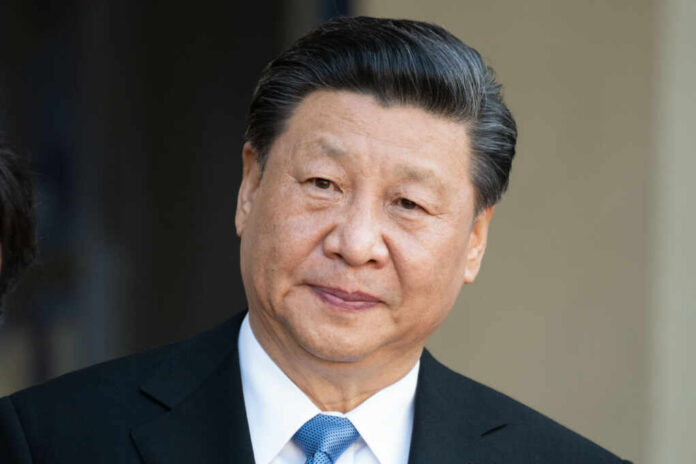
Chinese President Xi Jinping personally guiding Donald Trump through Zhongnanhai was not a routine photo op; it was access few foreign leaders ever see. Zhongnanhai is described as the central government compound in Beijing where Chinese leaders have lived and worked since the founding of the People’s Republic of China in 1949, making it the physical heart of communist power.[1] Allowing cameras to follow both presidents there underscored how seriously Beijing took Trump’s visit and the relationship it signaled.[1]
Available broadcast transcripts describe Xi pointing out ancient trees lining the grounds, including one roughly 490 years old and others believed to be more than 1,000 years old.[1] Those details were not tourist trivia. Chinese leaders routinely use historic sites to project continuity, civilizational depth, and political legitimacy. Walking beside Trump among trees older than the American republic allowed Xi to showcase China’s heritage while still treating the American president as an honored guest rather than a scolded subordinate.[1]
Mar-a-Lago Reciprocity and Rose Seeds Diplomacy
Xi did more than open the gates; he tied the entire moment back to Trump’s own turf. According to the transcript, Xi told Trump he chose Zhongnanhai “especially to reciprocate the hospitality extended to me in 2017 at Mar-a-Lago.”[1] That explicit reference matters. It acknowledges that the relationship did not start with bureaucrats in Washington or Beijing but with a face-to-face welcome at Trump’s private Florida resort, where he treated Xi as a visiting head of state, not a rival to be publicly humiliated.
Reporters note that during the garden tour Trump showed interest in the Chinese roses on the grounds, and Xi agreed to send rose seeds as a gift.[1][3] That small gesture has drawn sneers from liberal commentators, who fixate on snark about Trump’s landscaping choices back home.[3] Yet the exchange fits a long tradition of symbolic gifts in diplomacy. Seeds from the leadership compound’s garden are a living reminder that Xi linked personal rapport with Trump to the inner life of China’s ruling circle, rather than keeping him at arm’s length.
Carefully Choreographed Access and Media Spin
Public information about meetings inside Zhongnanhai is tightly controlled by the Chinese government, and the garden walk was no exception.[1][2] Journalists rely on curated footage, short transcript summaries, and limited pool access instead of full itineraries or complete verbatim readouts. Available material does not spell out which aides and translators were present, or exactly where the informal stroll ended and formal talks began, which makes it easier for hostile outlets to cherry-pick images and gossip instead of examining what this rare access actually signifies.[1]
Coverage of the broader Beijing visit confirms that Trump’s time with Xi was not a sideshow. Reporting from the South China Morning Post describes Trump’s multi-day state visit that included a full honor guard welcome at the Great Hall of the People, formal talks, a cultural stop at the centuries-old Temple of Heaven, and a lavish state banquet.[2] On the final day, Trump and Xi met again over tea and a working lunch, reinforcing that the garden tour occurred within a larger framework of sustained, high-level engagement rather than as an isolated media stunt.[2]
Symbolism, Power, and What It Means for Americans
While left-leaning outlets tried to reduce the Zhongnanhai visit to a “bonkers” question or a meme-worthy moment, the basic facts are not in dispute: Trump and Xi walked together through the most sensitive political compound in China, at Xi’s invitation, with the Chinese leader explicitly framing it as reciprocal hospitality and reportedly offering seeds from his own garden.[1][3] No serious counter-narrative challenges that the tour occurred or that Zhongnanhai carries deep symbolic weight inside the communist system.[1]
Xi Jinping Hosts Trump at Zhongnanhai | Garden Tour & Rose Seeds Gift#XiJinping #DonaldTrump #ChinaUSRelations #Zhongnanhai #Beijing #RoseSeedsGift #Diplomacy #TrumpInChina #GlobalPolitics #World pic.twitter.com/FyiMnxRkaY
— Asianet News English (@AsianetNewsEN) May 15, 2026
For Americans weary of globalist theatrics and hollow talking points, this highlights a different model. Trump’s approach relied on personal diplomacy, national symbolism, and clear respect for American strength rather than bureaucratic appeasement. A communist leader who normally keeps foreign guests outside the inner compound chose to answer Mar-a-Lago by opening Zhongnanhai. That does not solve every problem with Beijing, but it shows how a president who puts American interests first can still command respect on the world stage.
Sources:
[1] Web – Trump’s Bonkers Question to Xi on Private Tour Revealed
[2] Web – Trump leaves China after ‘very successful’ visit to ‘old friend …