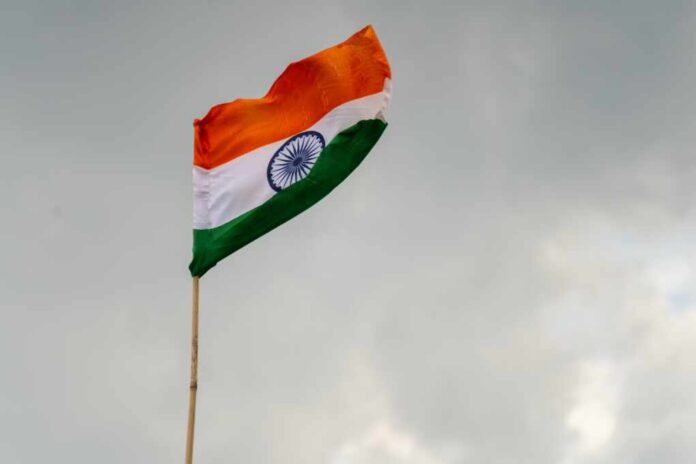
A single LNG tanker idling near Singapore exposed the hard line India draws between energy hunger and sanction risk.
Quick Take
- India rejected LNG tied to U.S.-sanctioned Russian facilities even as regional turmoil tightened gas supply.
- The cargo, linked to the Portovaya plant, has lingered offshore since mid-April, turning logistics into leverage.
- New Delhi keeps buying Russian crude under a temporary waiver, but treats LNG as a different, more traceable problem.
- Russia still wants the sale and talks continue on “permitted” cargoes that don’t trigger sanctions exposure.
A tanker in limbo and a message delivered face-to-face
India’s refusal wasn’t a press-release stunt; it was delivered in a meeting. On April 30, Russian Deputy Energy Minister Pavel Sorokin met India’s Petroleum Minister Hardeep Singh Puri, and India conveyed it would not take liquefied natural gas originating from U.S.-sanctioned Russian facilities. The result is unusually visible: a tanker associated with that cargo has been sitting near Singapore, undischarged, since mid-April.
That stranded ship matters because LNG is not just another barrel. LNG cargoes move through a chain of custody that insurers, banks, port operators, and commodity desks can audit. When documentation appears “non-Russian” while the supply trail points back to a sanctioned facility, the paperwork becomes part of the story. India’s decision signals to every intermediary—financiers, shippers, and terminal operators—that New Delhi won’t ask them to gamble their global access.
Why LNG sanctions bite harder than oil waivers
India has continued importing Russian crude oil, aided by a temporary U.S. waiver aimed at stabilizing markets amid wider geopolitical disruptions. LNG sits outside that comfort zone. Gas molecules may be fungible, but LNG cargoes arrive with fixed origin economics: a specific plant, a specific liquefaction chain, a specific shipping itinerary. That traceability makes “plausible deniability” harder, and it raises the risk of secondary sanctions for anyone facilitating the trade.
That distinction aligns with common sense and conservative prudence: protect the national interest without dragging domestic firms into avoidable legal and financial blowback. A government can seek affordable energy while refusing deals that could freeze payment channels, spike insurance costs, or jeopardize relationships with major trading partners. Energy security collapses quickly when banks won’t clear transactions and fleets can’t obtain coverage, so the cautious approach often saves money over time.
India’s balancing act: buy what you can defend, avoid what you can’t
India’s posture reflects a tightrope walk between two realities. Russia remains a major supplier and a willing discounter, and India’s economy needs dependable energy inputs. At the same time, U.S. sanctions carry extraterritorial bite, and India has strong incentives to protect access to Western finance, technology, and investment flows. The practical policy becomes selective engagement: keep crude flowing under permitted terms, refuse LNG tied to sanctioned nodes.
Russia’s strategy is equally straightforward: push volumes into non-Western markets as Western restrictions narrow options. The Sorokin-Puri meeting—reported as the second such engagement in two months—shows Russia sees India as a critical outlet, not a casual buyer. Yet the stalled tanker underscores buyer power. When a customer says no at the discharge point, sellers face demurrage, rerouting costs, and a shrinking set of ports and counterparties willing to touch the cargo.
Singapore’s offshore waiting game and the hidden bill
A cargo hovering near Singapore isn’t just an awkward headline; it is a meter running. Every day in limbo adds costs for the operator and complicates scheduling for the wider fleet. Delays can also tighten spot availability elsewhere, nudging prices higher right when import-dependent countries feel exposed. India, facing a gas squeeze tied to disruptions in the broader region, still opted to absorb that pressure rather than accept sanctioned LNG and inherit a larger strategic vulnerability.
Talks continuing about “permitted cargoes” hints at the likely endgame: restructure future supply toward Russian LNG that is not sanctioned, if such volumes can be verified cleanly. That’s not hypocrisy; it’s procurement discipline. Buyers in regulated markets pay a premium for certainty because uncertainty becomes a tax: higher freight, wider bid-ask spreads, more compliance staffing, and fewer willing counterparties. In LNG, those frictions can outweigh any discount Russia offers.
What this episode signals for Russia, China, and the next cargo
The broader market implication is a sorting mechanism. Countries and firms that are less sensitive to U.S. sanctions can absorb more of the restricted supply, while risk-averse buyers step back. Reports indicate China has been willing to buy both sanctioned and unsanctioned Russian LNG, providing Russia a pressure valve when other doors close. India’s refusal, by contrast, draws a bright line that simplifies decision-making for Indian importers and their Western-facing partners.
The unresolved question is not whether India needs gas—it does—but whether Russia can offer LNG that India can take without dragging a compliance cloud into every shipment. If Sorokin returns for more talks, the real negotiation will happen in contract clauses: origin guarantees, documentation standards, shipping transparency, and who bears the cost if a cargo gets stuck again. That is where energy geopolitics becomes real-world governance.
For readers watching from afar, the most telling detail remains the quiet one: India didn’t grandstand, it simply refused the sanctioned cargo and kept the conversation open for lawful alternatives. That combination—firm boundary, continued diplomacy—often produces the most durable outcomes. The tanker near Singapore may eventually find a buyer, but it already delivered its message: in LNG, compliance is part of the commodity.
Sources:
Sources: India refuses Russian LNG due sanctions; talks continue about permitted cargoes
India navigates a tenuous energy balance amid sanctions
India declines Russian LNG under sanctions; talks continue on permitted cargoes: sources
India declines Russian LNG under sanctions; talks continue on permitted cargoes