Twenty thousand people don’t “accidentally” wander onto a live military range unless something deeper than music is pulling them there.
Story Snapshot
- An illegal rave drew roughly 20,000 attendees, with some estimates climbing toward 40,000, onto a 150-year-old French military firing range in Cher.
- Authorities warned the land can contain unexploded ordnance, including older shells regularly found by bomb-disposal teams, and urged people to stay out of the woods.
- Organizers framed the event as a protest against tougher anti-rave laws that can bring penalties up to six months in prison for contributors.
- French officials deployed major resources: about 600 gendarmes and dozens of firefighters, while issuing fines, making arrests, and treating medical cases.
A rave on a weapons test site exposes a serious European governance problem
France’s Cher department became the setting for a surreal collision of youth culture, state authority, and plain old physics: an illegal rave unfolded on a military polygon near Cornusse, not far from Bourges. Officials said the site has been used for military activity for about 150 years and had recently hosted Caesar cannon tests. The threat wasn’t theoretical—unexploded munitions can sit quietly until one wrong step turns a party into a mass-casualty event.
The timeline matters because it shows intent, not spontaneity. The event began May 1, 2026, with reports of around 20,000 people and about 2,000 vehicles arriving. By Saturday, May 2, crowd estimates ranged higher—up to 40,000 in some reporting—while authorities maintained the party continued despite a prefectural ban. That kind of scale requires planning, logistics, and confidence that enforcement would hesitate to intervene decisively.
The danger wasn’t just noise or narcotics; it was buried in the soil
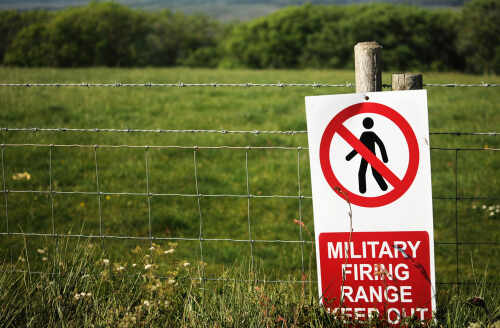
Military ranges are not abandoned gravel pits. They’re messy, layered landscapes where yesterday’s training becomes today’s hazard. The prefecture warned about old artillery shells and told people to avoid wooded areas, where visibility drops and metal can hide under leaves and churned ground. The site reportedly has no physical barriers, only signage, and even a road crossing it—an invitation for thousands who see “restricted” as “available if you’re bold.”
Authorities didn’t describe a single boogeyman risk; they described a menu of preventable disasters. Unexploded ordnance behaves like the worst kind of landmine: unpredictable, aging, and sensitive to disturbance. When people pack into off-limits terrain, they create secondary hazards too—vehicles compressing soil, improvised campsites, and emergency access bottlenecks. A panic triggered by a rumor, a medical crisis, or a police maneuver becomes exponentially harder to manage when the ground itself may be lethal.
French officials used containment because dispersion can turn deadly fast
French authorities responded with a posture that looked less like a raid and more like a pressure campaign. Reporting described about 600 gendarmes deployed, along with firefighters and medical response, plus drone surveillance and a closed road. Officials issued dozens of fines, largely tied to narcotics, and placed several people in custody while treating a number of medical cases. That approach signals a hard calculation: forcing tens of thousands to flee across hazardous land can be worse than monitoring them.
This is where grown-up public safety collides with politics. Conservatives tend to value law, order, and consequences, and those instincts apply here: a prefectural ban should mean something. Yet common sense also says you don’t create a stampede across a suspected munitions field to prove a point. The state’s job is to protect innocent life first, then enforce the rules with clear follow-through afterward—especially if the setting includes risks no concertgoer can realistically evaluate at 2 a.m.
The protest angle tests whether “freedom” can ignore responsibility
Organizers cast the rave as a protest against “criminalization” of rave culture, pointing to new rules that raise penalties, including possible prison time for those who contribute to illegal events. That argument resonates with anyone wary of government overreach. The problem is the chosen battleground: a weapons testing area is not a symbolic plaza. When protest tactics knowingly amplify the chance of mass harm, the moral high ground collapses into self-indulgence.
The most revealing detail is the site’s apparent ease of access. Signs exist, but no physical barriers, and a road crosses the range—conditions that would never pass muster around critical infrastructure in the United States. A government can debate the right level of regulation for nightlife, but it cannot shrug at perimeter control on active or recently used defense property. If thousands can enter once, they can enter again, and not all future intruders will bring glow sticks.
What this weekend foreshadows for France’s “free party” crackdown
The immediate impacts were predictable: local disruption in a village of roughly 220 residents, traffic, noise, emergency services stretched thin, and reports of damage and tagging near military facilities. The longer-term impact could be sharper. France now faces a choice between symbolic laws and enforceable ones. If penalties climb while enforcement remains inconsistent, organizers will keep gambling that the state will back away in the moment and litigate later—after the videos circulate and the crowd disperses.
DANGER DANCE: Over 20,000 Europeans Attend French Rave on Military Field Filled With Active Unexploded Munitions
READ: https://t.co/yoC7nXC54n pic.twitter.com/KvzPCN30ZN
— The Gateway Pundit (@gatewaypundit) May 4, 2026
The uncomfortable takeaway is that the rave wasn’t just reckless; it was a stress test of authority. The music will end, but the precedent lingers: a mass gathering can defy a ban, occupy dangerous ground, and force officials into cautious containment rather than immediate removal. A serious government closes that loop with clear prosecutions, restitution for damages, and tightened access to hazardous sites. Otherwise the next “protest party” picks an even riskier stage.
Sources:
Thousands at illegal French rave on ‘dangerous’ military site
Illegal rave in France draws 20,000 to ‘dangerous’ military site