President Trump’s high-stakes Asia tour has secured major trade victories with Japan and South Korea while setting the stage for a critical showdown with China’s Xi Jinping that could determine whether Beijing’s economic stranglehold over America continues or finally breaks.
Story Snapshot
- Trump signed a rare-earths deal with Japan to counter China’s monopoly on critical minerals essential for American manufacturing and defense
- The President secured trade agreements worth hundreds of billions with Japan and South Korea, strengthening alliances while reducing U.S. dependence on hostile nations
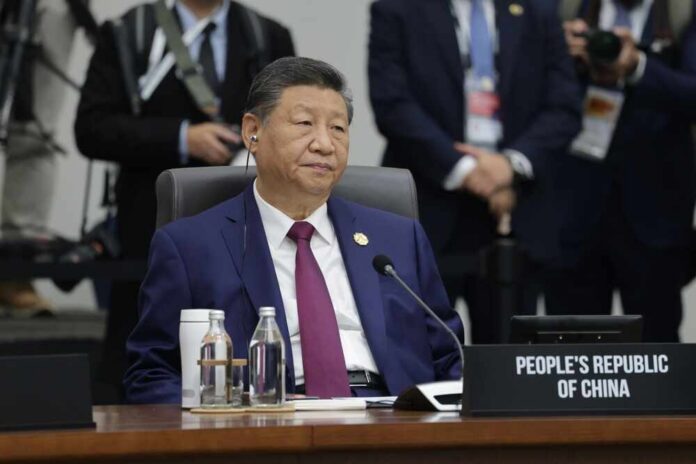
- A pivotal 3-4 hour meeting with Xi Jinping aims to resolve a month-long trade war triggered by China’s retaliatory export restrictions on rare earth elements
- Experts warn that previous U.S. concessions may have emboldened Beijing, raising concerns about whether Washington is negotiating from strength or weakness
Strategic Alliance Building in Tokyo
President Trump landed in Tokyo for crucial meetings with Japan’s Prime Minister Sanae Takaichi, the nation’s first woman to hold the position. The centerpiece of the visit was a rare-earths framework agreement designed to break China’s stranglehold on minerals critical to American technology and defense industries. China currently controls approximately 90 percent of the global rare earths market, giving Beijing dangerous leverage over U.S. manufacturing. The deal represents a fundamental shift toward “friendshoring” critical supply chains to trusted allies rather than adversaries who exploit economic dependencies for geopolitical gain.
Massive Investment Commitments Secured
Trump announced that Japan committed to a $550 billion investment framework in exchange for tariff relief, building on previous commitments that have already brought manufacturing jobs back to American soil. Toyota alone pledged $10 billion for new plants across six to seven states, directly countering decades of offshoring that hollowed out the American industrial base. These agreements reflect a core principle: using America’s market access as leverage to secure tangible benefits for workers, not just empty promises from corporations and foreign governments more interested in profits than patriotism.
South Korea Trade Deal Advances American Interests
In South Korea, Trump met with President Lee Jae Myung at the APEC summit in Busan, finalizing trade agreements and a shipbuilding partnership involving Hanwha Group’s acquisition of Philadelphia Shipyard. The President claimed these deals would generate $22 trillion in investments, though independent verification of that figure remains unavailable. Regardless of the exact numbers, the agreements signal renewed commitment to rebuilding American industrial capacity in strategic sectors like shipbuilding, which has atrophied under globalist policies that prioritized cheap foreign labor over national security and American jobs.
The China Challenge Looms Large
The tour’s ultimate test came with Trump’s scheduled meeting with Xi Jinping on the sidelines of the APEC summit. The summit follows a month-long trade war triggered when China imposed rare earth export restrictions in retaliation for U.S. technology export controls targeting semiconductors and advanced computing. Trump expressed optimism about reaching a “grand deal,” stating that making deals is “better than fighting.” However, the meeting carries significant risks. China’s willingness to weaponize its rare earths monopoly demonstrates Beijing’s ruthlessness in exploiting American vulnerabilities created by years of shortsighted globalization policies.
Warning Signs of Weakened Leverage
Foreign policy analysts at the Brookings Institution raised concerns that previous U.S. concessions may have signaled weakness to Beijing, potentially inviting “unpleasant surprises” during negotiations. Trump had walked back “Liberation Day tariffs” after Chinese retaliation and softened positions on technology and Taiwan issues before the summit. These moves, intended as diplomatic overtures, may have instead convinced Xi that Washington lacks the resolve to endure economic pain in defense of strategic interests. For Americans weary of watching elites surrender national interests for personal gain, this dynamic is disturbingly familiar: powerful interests in both countries profit from interdependence while ordinary citizens bear the costs.
What Hangs in the Balance
The outcome of Trump’s Asia tour will determine whether America can successfully pivot away from dangerous dependencies on China without triggering economic chaos. Short-term benefits include potential de-escalation of trade hostilities and reduced supply chain vulnerabilities through the Japan rare-earths agreement. Long-term implications center on whether the United States can rebuild sovereign manufacturing capacity in critical industries or remains hostage to adversarial nations controlling essential resources. The stakes extend beyond economics to national security: a country that cannot produce its own strategic materials cannot defend itself, regardless of military spending levels.
Both conservative and progressive Americans share legitimate frustrations about how decades of bipartisan globalization policies enriched multinational corporations and foreign governments while devastating American communities. Trump’s approach of leveraging tariffs and market access to rebuild alliances and reshore critical industries addresses those concerns directly, though success depends on sustained commitment rather than tactical retreats when Beijing applies pressure. The question remains whether Washington’s political class, long captured by corporate interests profiting from offshoring, will support rebuilding American industrial sovereignty or continue prioritizing quarterly profits over national resilience.
Sources:
Trump arrives in South Korea for final stop of Asia tour, high-stakes meeting with Xi – ABC News
What’s at stake in Trump’s trip to Japan, South Korea and China – CBS News
What’s at stake during Trump’s visit to Asia – Brookings Institution