
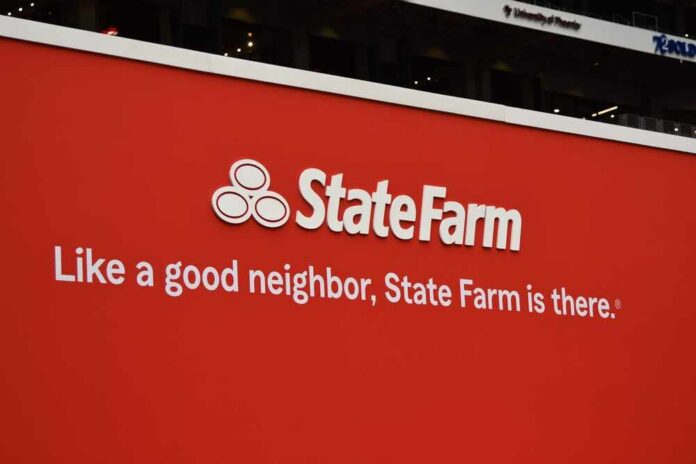
California Democrats are floating the nuclear option against the state’s biggest home insurer—threatening to suspend State Farm’s license after wildfire claim disputes.
Quick Take
- California’s insurance regulator has accused State Farm of 430 violations tied to 2025 Los Angeles wildfire claims handling.
- Proposed penalties range from $2 million to $4.3 million, and regulators are weighing a one-year license suspension.
- State Sen. Ben Allen (D) is urging regulators to escalate enforcement beyond fines, arguing survivors were mistreated during recovery.
- Critics warn aggressive enforcement could further destabilize California’s shrinking home-insurance market and squeeze homeowners.
Regulators allege 430 violations tied to LA wildfire claims
California Department of Insurance enforcement actions filed in May 2026 accused State Farm of 430 violations connected to claims from the 2025 Los Angeles County wildfires. The allegations described problems such as unjustified delays, improper denials of smoke and ash remediation coverage, and unfair treatment of policyholders during a vulnerable recovery period. The case is headed toward an administrative law judge process, meaning the allegations have been made but are not yet a final ruling.
The department proposed financial penalties reported in a $2 million to $4.3 million range, alongside an unusually severe option: a one-year suspension of State Farm’s certificate of authority to operate in California. That kind of move is rare because it risks immediate ripple effects for customers who rely on State Farm coverage. For now, State Farm’s operating status remains unchanged until the adjudication process is completed and a final decision is issued.
Sen. Ben Allen pushes “hit it where it hurts most” enforcement
State Sen. Ben Allen, a Democrat representing Pacific Palisades, framed the enforcement action as confirmation that survivor complaints had merit and argued that regulators should go further than fines. In public comments, Allen said the state should not tolerate barriers that keep disaster survivors from receiving what they are owed and insisted fair claims handling cannot be treated as a privilege. He also dismissed arguments that a suspension would be politically motivated and harmful to customers.
Allen’s posture reflects a broader Sacramento pattern: lawmakers press agencies to “do something” after a high-profile failure, even when that “something” could worsen underlying market conditions. California’s home insurance market has already tightened amid insurer pullbacks and wildfire risk. Conservatives watching this dynamic see a familiar tension between consumer protection and heavy-handed regulation, especially when the biggest players become political targets while ordinary homeowners struggle to find affordable coverage.
Due process will shape whether the punishment fits the case
The enforcement track runs through an administrative law judge, with the insurance commissioner retaining final authority after that process. That matters because the gap between “alleged violations” and “proven violations” is where due process lives. If regulators substantiate a pattern of misconduct, strong penalties can deter future abuse. If the case relies on ambiguous standards or weak documentation, an extreme remedy like suspension could look arbitrary—and further erode trust in institutions.
Market disruption risks colliding with consumer protection goals
State Farm’s size makes every regulatory decision economically consequential. Research surrounding the case suggests roughly 1.5 million or more policyholders in California could be affected if a license suspension ever took effect, forcing families to scramble for replacement coverage in an already strained market. Analysts also warn reduced competition can drive premiums higher statewide. Even voters sympathetic to fire survivors may question whether pushing a major insurer out, even temporarily, solves affordability—or just shifts costs to everyone else.
The political subtext is hard to miss: enforcement actions like this can function as both accountability and a signal to activist constituencies that government is “fighting” for them. Yet both left- and right-leaning Americans increasingly share a frustration that government often reacts theatrically while failing to fix root causes—like wildfire mitigation, building policies, and risk exposure that drive premiums up. The next key milestone is the still-unscheduled administrative hearing, where evidence will matter more than slogans.
Sources:
Senator Allen responds to enforcement action against State Farm
State Farm California violations
California accuses State Farm of delaying, underpaying wildfire claims