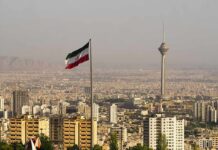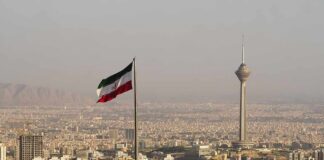

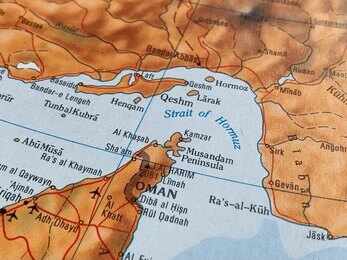
As Iran tests Trump’s new Hormuz deal with drones, tolls, and threats, retired General Jack Keane is warning that the real red line for America runs straight through the Strait of Hormuz itself.
Story Snapshot
- Iran’s Revolutionary Guard is trying to control shipping in the Strait of Hormuz with threats, mines, and new “rules.”
- A cargo ship was just hit by a one-way attack drone, directly challenging Trump’s agreement to reopen the waterway.
- Trump and U.S. Central Command say the strait is open, but Iran is clearly probing how far it can push.
- Retired General Jack Keane argues America must set a clear red line: Iran does not get to choke off the world’s oil supply.
Iran Pushes ‘New Rules’ in the World’s Most Dangerous Waterway
Iran’s Revolutionary Guard Corps is not hiding what it wants in the Strait of Hormuz. Its commanders have warned that ships must follow routes that Iran approves, and that any “unauthorized” crossings are unacceptable and will be “dealt with.” Iranian state media has talked up a new Persian Gulf Strait Authority to manage traffic, with statements that safe transit cannot be guaranteed for vessels that refuse Tehran’s routes or demands. Together, these moves amount to a public claim that Iran can dictate who moves energy through this critical choke point.
Recent history shows these are not empty words. During the 2026 crisis, Iran used drones, fast boats, and sea mines to threaten or hit ships and drove traffic down by more than 95 percent at the worst point. It also experimented with charging “tolls” to ships that wanted safe passage, favoring friendly states and punishing others. Analysts now warn this mix of physical threats and extortion is Iran’s playbook: it may not seal the strait forever, but it can make global energy markets scream while it lines its own pockets.
Drone Strike on ‘Ever Lovely’ Tests Trump’s Hormuz Deal
That strategy is now colliding with President Trump’s pledge to keep sea lanes open. On June 25, a Singapore-flagged cargo ship, the Ever Lovely, was struck in the Strait of Hormuz by a one-way attack drone, damaging the bridge but not sinking the vessel. U.S. officials have attributed the strike to the Revolutionary Guard, calling it a clear test of the new memorandum of understanding that was supposed to reopen the waterway toll‑free for sixty days in exchange for limited U.S. sanctions relief. The attack paused United Nations efforts to help move ships out of danger, showing how even a single strike can rattle a fragile peace.
This comes just days after an Iranian commander bragged that Iran could “shut off the Strait of Hormuz at a whim,” boasting about mines, drones, and small attack boats. That claim follows a long pattern: Iran has repeatedly threatened to close the strait when pressured over its nuclear program or its terror proxies. Yet research on past crises, including work by the Strauss Center, finds hard limits on Iran’s ability to fully stop tanker traffic for long. Large tankers are built to absorb damage, modern weapons are not optimized for them, and complex campaigns often fail. Iran can cause serious disruption, but history says it struggles to maintain a total blockade if the United States pushes back.
Trump, Vance, and CENTCOM Say the Strait Is Open – For Now
The Trump administration insists it has already answered Iran’s challenge. U.S. Central Command reported that on June 20, fifty‑five merchant ships safely crossed the strait, carrying more than seventeen million barrels of oil. Its public release stressed that “safe passage through the international waterway remained intact.” A Joint Maritime Information Center advisory backed this up, telling ship owners that a designated route remained open and free of arbitrary Iranian claims. Vice President J.D. Vance told Fox & Friends that sixteen million barrels of oil exited the Strait the day before, calling it a record that proves Iran has not closed the waterway.
To secure that reality, U.S. forces have not relied on words alone. Reports from the Wall Street Journal detail how commanders deployed low‑profile underwater drones to survey and clear mines, then established a cleared channel close to Oman, away from Iran’s heaviest threats. This approach matches what retired General Jack Keane has described in several interviews: a step‑by‑step plan to clear mines, knock out long‑range missiles and drones, and escort commercial ships until Iran’s leverage collapses. In his view, forcing the strait open is “very feasible” militarily and is central to bringing Iran “to its knees” economically, since about ninety percent of its oil exports move through a handful of key points.
Keane’s Red Line: Free Passage or Confrontation
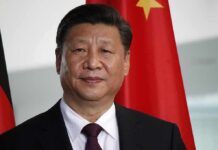
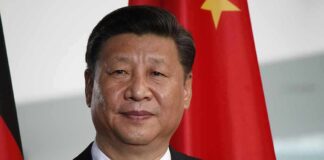
Keane’s warning to Trump comes down to one core idea: Iran cannot be allowed to turn the Strait of Hormuz into a cash register and a political weapon at the same time. He has urged the president to call China’s Xi Jinping and explain that the United States will block Iranian oil tankers from reaching buyers in China, India, Pakistan, and Turkey unless Tehran gives up its grip on the strait. That kind of energy squeeze, he argues, hits Iran’s economic “jugular” and forces choices without risking as many American lives as a full‑scale ground war.
For American conservatives, the stakes go far beyond one shipping lane. About a fifth of the world’s oil supply passes through this narrow stretch of water. When Iran throttles traffic, families feel it at the gas pump and in the price of everything moved by truck. When globalist elites shrug at Iran’s threats or dress them up as “regional tolls,” they are playing with the same fire that drove inflation and sky‑high energy bills in past years. Keane’s red line echoes a simple constitutional and strategic truth: free commerce on the high seas is not a gift from Iran, it is a core American interest that Washington must defend, with force if necessary, so that hostile regimes cannot hold our economy, or our allies, hostage.
Sources:
thegatewaypundit.com, dw.com, thehill.com, wsj.com, youtube.com, cnn.com, reuters.com, facebook.com, crisisgroup.org, reddit.com, britannica.com, bsg.ox.ac.uk, csis.org