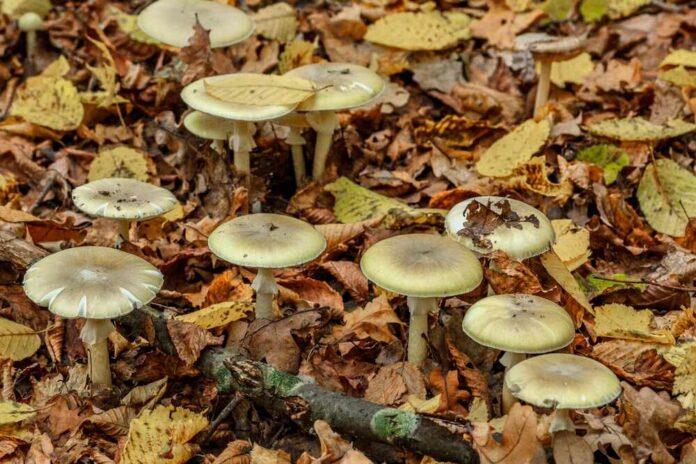
As California battles a deadly surge in wild mushroom poisonings, the real lesson is how quickly bad information, cultural habits, and government messaging can turn a simple hike into a life-or-death emergency.
Story Snapshot
- California officials report at least 35 severe poisonings, three deaths, and three liver transplants tied to wild-foraged “death cap” mushrooms since late 2025.
- Health bureaucrats are responding with blanket “do not forage at all” warnings instead of targeted, transparent education.
- Immigrant families and people facing food insecurity appear to be disproportionately harmed, raising questions about outreach priorities.
- The outbreak exposes how social media hype and one-size-fits-all advisories can endanger families who just want affordable food and time outdoors.
Deadly Spike Reveals How Fast a Seasonal Risk Became a Statewide Crisis
California’s own numbers show this is not a routine scare story. Between November 18, 2025, and January 6, 2026, the California Poison Control System identified 35 hospitalized cases of amatoxin poisoning linked to wild-foraged mushrooms, including three adult deaths and three liver transplants, a roughly seven-fold jump over the state’s usual five serious cases in an entire year.[3] Officials say patients ranged from toddlers to seniors, and cases stretched from Sonoma down to San Luis Obispo, proving the danger is widespread.[1][3]
Poison-control leaders are calling the current pattern the largest cluster of amatoxin poisonings in decades, pointing squarely at the highly toxic “death cap” mushroom, Amanita phalloides.[2] Every confirmed patient had foraged mushrooms and developed symptoms within six to twenty-four hours, often starting with what looks like a bad stomach bug before progressing to catastrophic liver failure.[2][3] Doctors warn that a brief period of improvement can trick families into thinking the worst is over, just as organ damage is accelerating.[2][3]
Why Death Caps Are So Dangerous—and Why Kitchen Folk Wisdom Will Not Save You
California health authorities stress that death cap mushrooms are now widespread in parts of Northern California and the Central Coast, especially near oaks and other hardwood trees, including pines.[3] The California Department of Public Health warns that death caps can easily be mistaken for safe varieties and that their toxins cannot be neutralized by boiling, cooking, or drying, defeating the sort of kitchen tricks many families rely on.[3] Park officials go further, calling death caps and the related western destroying angel two of the world’s most toxic mushrooms.
Public guidance from the University of California, Davis reinforces the point that mushroom identification is genuinely hard, even for people who think they know the land.[4] Doctors there advise that unless someone is absolutely certain of a species, they should never eat it, and anyone who may have ingested a poisonous mushroom must seek immediate care and call poison control rather than waiting to “see how it goes.”[4] No standard rapid test exists for amatoxins, so physicians must act based on history and symptoms, not ironclad lab confirmation, which makes early, honest reporting vital.[2]
Who Is Getting Hurt—and What the Bureaucrats Are Not Saying Out Loud
Behind the sterile numbers is a pattern that should anger anyone who cares about families trying to stretch a dollar. California’s poison-control specialists acknowledge that cultural traditions, recent immigration, and food insecurity have increased foraging risks, with many cases involving immigrant families who confused California’s deadly death caps with edible species from their home countries.[2] That profile points to people trying to keep cultural foodways alive and put low-cost meals on the table as inflation and high taxes squeeze their budgets.
Instead of focusing on those realities, state health messaging leans on sweeping, one-size-fits-all directives that tell everyone, experienced or not, to stop foraging wild mushrooms entirely this season.[3] Officials have rolled out public service announcements and multilingual flyers, but the tone is almost entirely prohibitive rather than empowering families with clear, practical tools and honest discussion about where and how the risk is highest.[1][3] The same agencies that collect the data also control the message, leaving little room for nuanced voices who actually know the woods.[2][3]
Social Media Hype, “Safety Theater,” and the Need for Honest Transparency
Poison-control experts say social media groups and online videos have amplified risky foraging, offering misleading or incomplete identification tips that can make amateurs falsely confident.[2] That is a genuine concern in a culture where internet influencers often carry more weight than local elders or responsible field guides. But it also raises the question: where are the targeted efforts to counter that misinformation with solid, practical education rather than blanket fear? Right now, alarmist clips and simple “don’t do it” slogans dominate the narrative.
Parts of California are experiencing an 'unprecedented' rise in wild mushroom poisonings, with experts attributing this to the current weather conditions and increased outdoor activity. The California Poison Control System has reported a significant increase in calls related to…
— Tegu breaking news. (@tegufy_news) May 15, 2026
Conservative readers know what this looks like because they have seen it with pandemic rules, gun-control debates, and energy policy: a real problem becomes a pretext for vague, top-down warnings, while the bureaucracies avoid deeper questions. How much of this surge is truly new, and how much reflects better reporting? Why has California allowed conditions where people feel compelled to forage for food in the first place? Officials are not releasing detailed case-level data that would let independent researchers test those questions.[2][3] Families deserve transparency, not paternalism.
What Responsible Families Can Do While Pushing for Better Policy
For now, the harsh reality is that eating wild mushrooms in California carries a serious, documented risk, and once someone swallows a death cap, no kitchen hack or home remedy can undo it.[3] Families who enjoy the outdoors should keep children and pets from touching or tasting any wild mushrooms, stick to commercially sold varieties, and treat sudden vomiting or diarrhea after possible exposure as a medical emergency, telling doctors immediately that mushrooms might be involved.[3][4] Those are basic steps to protect loved ones while the debate over state messaging continues.
At the policy level, conservatives can press California leaders for more than posters and press releases. That means demanding public release of anonymized case data for independent review, pushing for community-based education in affected immigrant and low-income neighborhoods, and insisting that public-health agencies stop treating every citizen like a reckless child. This outbreak shows how quickly vague warnings and social-media noise can put real families in danger. Clear facts, local accountability, and respect for personal responsibility are the best antidotes.
Sources:
[1] Web – California officials warn of wild mushroom poisoning
[2] Web – California Poison Control System Responds to Largest …
[3] Web – Increase in mushroom poisonings in California – CDPH
[4] Web – What you need to know about wild mushroom poisoning