A top Trump diplomat is facing fresh scrutiny after reports he’s courting billions from foreign sovereign funds while representing the United States in the same region.
Quick Take
- Reports say Jared Kushner is seeking $5 billion or more for his private equity firm, Affinity Partners, from Middle Eastern governments.
- The outreach reportedly includes Saudi Arabia’s Public Investment Fund, plus investors connected to Qatar and the UAE.
- Kushner previously said a $1.5 billion raise in late 2024 would cover the firm’s needs “for the next four years” to avoid conflicts during Trump’s term.
- President Trump appointed Kushner as U.S. Special Envoy for Peace on Feb. 19, 2026, a role that comes with financial disclosure expectations.
What the Report Says Kushner Is Raising—and From Whom
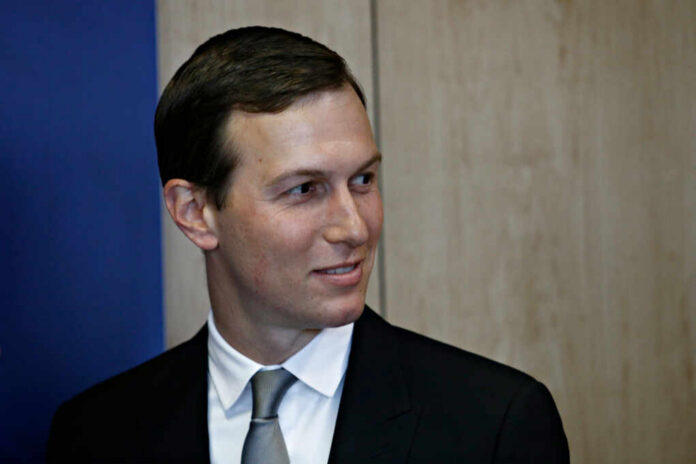
Reports published in mid-March say Jared Kushner, now serving as U.S. Special Envoy for Peace, is simultaneously pursuing at least $5 billion in new commitments for Affinity Partners, the private equity firm he founded after the first Trump term. The reporting describes outreach to major Gulf sovereign funds, including Saudi Arabia’s Public Investment Fund, with additional contacts involving investors tied to Qatar and the United Arab Emirates.
As described by multiple outlets citing the same underlying New York Times reporting, these discussions took place in recent weeks and follow earlier fundraising by Affinity. The reports do not confirm that new money has been secured; the central claim is that fundraising efforts are underway. That distinction matters, because the political and ethical debate hinges on whether these outreach efforts intersect with current U.S. diplomacy.
A Public Pledge From 2024 Now Collides With a 2026 Envoy Role
The controversy largely stems from a public statement Kushner made in December 2024 after raising about $1.5 billion from funds connected to Qatar and the UAE. On a podcast appearance referenced in the reporting, Kushner said that raise should cover the firm’s needs “for the next four years,” framing it as a way to avoid fundraising during Trump’s return to office and reduce conflict-of-interest concerns.
That commitment is now being revisited because Kushner accepted a formal diplomatic position on Feb. 19, 2026, when President Trump appointed him Special Envoy for Peace. The reporting describes Kushner’s post-appointment outreach as contradictory to the earlier pledge. No rebuttal from Kushner is included in the cited coverage, leaving the public with a one-sided record built primarily on anonymous sourcing and watchdog reaction.
Why Gulf Sovereign Money Raises Conflict Questions in Plain English
Affinity Partners’ prior ties to the region are part of why critics are focused on this story. After Kushner left the White House in 2021, his firm received a reported $2 billion investment from Saudi Arabia’s Public Investment Fund, making it a central backer. The newer reports say Affinity representatives have again met with the Saudi fund while Kushner holds an envoy portfolio involving sensitive regional files.
For conservatives who prioritize national sovereignty and clean lines between public duty and private profit, the basic issue is easy to understand: foreign governments don’t deploy billions casually, and sovereign wealth funds are not ordinary private investors. Even when investments are lawful, the appearance of leverage can erode credibility for U.S. negotiators and distract from America-first diplomacy focused on outcomes, not relationships.
Disclosure Deadlines and Oversight Gaps Fuel the Debate
Several reports emphasize that Kushner’s envoy post triggers financial disclosure expectations, and watchdog groups have highlighted a looming filing deadline around late March 2026. Coverage also notes that Kushner did not go through Senate confirmation for the role, which can limit the kind of public vetting that typically accompanies high-profile diplomatic appointments. Those are process issues, not verdicts.
At the same time, it leaves key facts unresolved. The public has not been shown term sheets, final commitments, or a detailed accounting of what discussions occurred, beyond descriptions attributed to people familiar with the talks. Until disclosures are filed and reviewed, it remains unclear how Affinity’s fundraising timeline and Kushner’s diplomatic agenda overlap in practice, rather than in headlines.
What Happens Next—and What to Watch
The next concrete development is likely Kushner’s required financial disclosure, which could clarify whether new investments have been finalized and what obligations, if any, attach to them. The reporting indicates that criticism is already growing from ethics-focused organizations, which argue that foreign fundraising during active diplomacy creates unacceptable conflicts or, at minimum, undermines public trust in negotiations involving Iran and Gulf partners.
Jared Kushner Reportedly Seeks $5B From Middle East Governments for His Firm While Serving as Envoy https://t.co/XQiyl2G3tv
— Mediaite (@Mediaite) March 17, 2026
For voters still angry about the Biden-era culture-war obsessions and spending spirals, this episode is a reminder that the public expects higher standards from everyone in government—especially in posts tied to war, peace, and U.S. leverage abroad. If the administration wants to keep the focus on results—security, stability, and American interests—clear disclosures and tight guardrails are the fastest way to drain oxygen from the story.
Sources:
Kushner Breaks Pledge, Seeks $5 Billion More From Foreign Governments
Jared Kushner Seeks $5 Billion From Foreign Governments for Private Firm
Mind-boggling corruption: Kushner seeks $5 billion from foreign governments for his firm