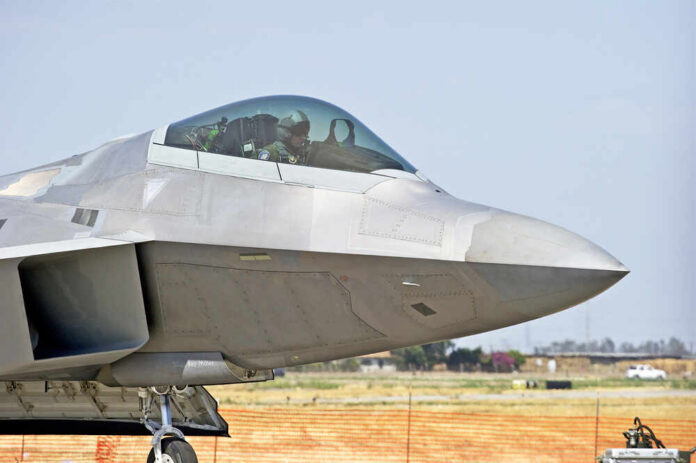
Pratt & Whitney’s F119 engine just crossed one million flight hours on the F-22 Raptor, underscoring how far ahead American air power still is while China and Russia struggle to catch up.
Story Snapshot
- The F119 engine powering the F-22 Raptor has passed one million flight hours, a major U.S. milestone.
- The F119 is the world’s first operational fifth-generation fighter engine and has served the Air Force for over 20 years.
- Its supercruise, thrust vectoring, and stealth features keep American fighters ahead of Chinese and Russian designs.
- China’s WS-15 and Russia’s engines still lack the proven service life and reliability the F119 has already demonstrated.
American Engine Milestone Shows Long-Term Edge
Pratt & Whitney announced that its F119 engine, which powers the Lockheed Martin F-22 Raptor, has now surpassed one million flight hours in United States Air Force service. Each F-22 flies with two of these engines, and they have been in front-line use for more than twenty years. This milestone reflects thousands of real combat and training sorties, not just test stand numbers. It shows that American engineers built a fifth-generation engine that can perform and endure in the real world.
The F119 was the first operational fifth-generation fighter engine, and it remains the core of the F-22’s unmatched performance. Pratt & Whitney designed it with stealth features, a high thrust-to-weight ratio, and a special nozzle that can aim the engine’s thrust up or down to help the jet turn harder. This thrust vectoring, combined with powerful thrust, gives the F-22 extreme agility and makes it very hard for enemy pilots to match in a dogfight.
Supercruise and Stealth Keep U.S. Pilots Ahead
A key feature of the F119 is supercruise, which means the F-22 can stay supersonic without using fuel-hungry afterburners. Flying fast without afterburner lets the jet cover more distance on the same fuel and keeps its heat signature lower, which helps stealth. Defense reporting has noted that F-22s have flown over 200,000 sorties since 2005 while relying on this engine to deliver both speed and reach for missions defending the United States and its allies.
Pratt & Whitney and independent technical write-ups describe the F119 as a low-bypass, high-thrust engine in the 35,000-pound class that can push the F-22 past Mach 1.4 without afterburner. That kind of sustained supersonic speed gives American pilots a big edge in deciding when to fight and when to disengage. It also pairs with radar-evading design to let the F-22 strike first, which fits the Trump administration’s push for clear military overmatch rather than risky “near-peer” parity.
China and Russia Still Chasing Proven Reliability
Chinese engineers have spent decades trying to field the WS-15 “Emei” engine for their J-20 stealth fighter, aiming for similar supercruise and high thrust. Open-source data shows impressive claimed numbers for thrust and thrust-to-weight ratio, but also a shorter service life than the F119 and continuing work to reach full maturity. Reports note that earlier J-20s had to use interim engines, and only recent tests show the WS-15 finally flying in both engine positions on the jet.
🇺🇸 Pratt & Whitney F119 engines powering the U.S. Air Force's F-22 Raptor stealth fighter aircraft has surpassed one million engine flight hours. @RTX_News
Two F119 turbofan engines power each F-22 Raptor fifth-generation fighter aircraft, delivering unparalleled aircraft… pic.twitter.com/njbr0Xioin
— DefPost (@defpostmedia) June 30, 2026
GlobalSecurity’s technical comparison highlights that the F119’s service life is around 6,800 hours, while China’s WS-15 is estimated at about 3,600 hours, roughly half as long. That gap matters for taxpayers and readiness, because engines that last longer need fewer replacements and keep jets available for missions more often. While Chinese media now touts WS-15 supercruise, the United States already has decades of proven, audited performance behind the F119 and its derivative F135 on the F-35.
Why This Matters for U.S. Strength and Spending
This one million hour mark also shows the value of past investment in American industry and careful defense manufacturing, which conservative voters often demand. Department of Defense manufacturing guidance stresses reliable design, smart sustainment, and long-term support so systems meet all goals in service. The F119 program followed that path, including accelerated mission tests that simulated fifteen years of flying in only four years to prove full life capability before large-scale use.
Looking forward, new adaptive cycle engines now in development promise even better range and fuel savings for future fighters, building on lessons from engines like the F119. Studies of these adaptive designs point to about 25 percent lower fuel use and 30 percent more operating range compared with traditional engines, helping both combat power and budget discipline. For conservatives watching federal spending, this shows that keeping an edge in engine technology can mean stronger defense without endless waste.
Open Questions and Information Gaps
Pratt & Whitney calls the F119’s capability and readiness “unmatched,” but does not publish detailed failure rates or direct comparisons with Chinese and Russian engines. Critics in defense media often say such claims look like marketing unless backed by independent data. They would like to see United States Air Force readiness reports showing how often F-22 engines are available versus foreign fighters. So far, most detailed numbers on Chinese systems like the WS-15 come from open-source estimates instead of clear official disclosures.
Even with those gaps, the core fact stands firm: an American-built fifth-generation engine has quietly logged one million real flight hours on front-line stealth fighters while rivals are only now finishing their first full domestic engines. For readers worried about foreign threats and mixed messages from globalist media, this milestone is a concrete sign that United States air power still leads the pack, thanks to engineers, factory workers, and aviators whose work backs our Constitution and keeps our nation safe.
Sources:
19fortyfive.com, investing.com, prnewswire.com, rtx.com, instagram.com, x.com, aol.com, facebook.com, youtube.com, reddit.com, defenseopinion.com, acqnotes.com, jrautomation.com