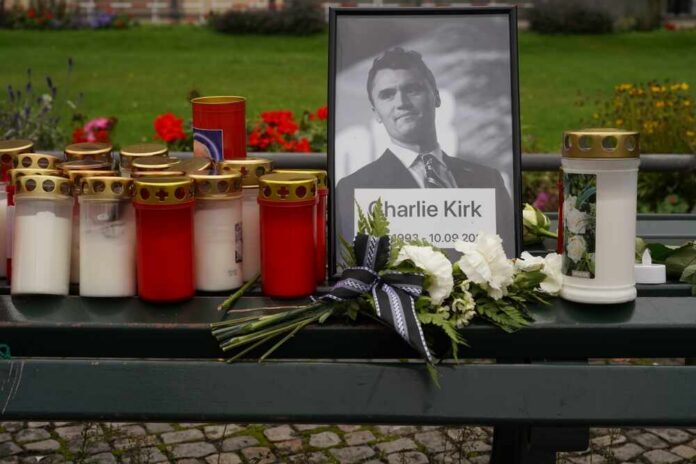
As a critical hearing begins in Utah, hard DNA and rifle evidence in the Charlie Kirk assassination case now collides with a fierce courtroom battle over an inconclusive bullet report and media misconduct.
Story Snapshot
- DNA on the rifle trigger, cartridges, towel, and rooftop tools strongly ties Tyler Robinson to the shooting setup.
- Federal ballistics experts matched the spent casing to Robinson’s rifle but could not conclusively match the damaged bullet fragment.
- The judge unsealed the Bureau of Alcohol, Tobacco, Firearms and Explosives report and later held a prosecutor in contempt over media comments.
- Defense lawyers are using the inconclusive bullet analysis and claims of withheld data to delay hearings and attack the death penalty request.
Evidence Linking Robinson to Kirk’s Assassination
Prosecutors say this case rests on **forensic facts**, not political spin. Investigators recovered a bolt-action Mauser Model 98.30-06 rifle, a towel, one spent casing, and several unfired rounds in a wooded area near Utah Valley University, close to where Charlie Kirk was shot while speaking to a conservative crowd. Charging documents and media reports state that DNA consistent with Tyler Robinson’s was found on the rifle trigger, other rifle parts, the fired casing, two of the three unfired cartridges, and the towel used to wrap the gun. Federal Bureau of Investigation Director Kash Patel also said DNA from the towel and a screwdriver recovered on the rooftop where the fatal shot was fired both matched Robinson, further tying him to the weapon and firing position.
The rifle itself is not just any gun; it was described by Robinson’s own father as matching a firearm previously given to his son, strengthening the link between the suspect and the weapon found near the scene. Court filings describe “voluminous” discovery, including video showing a figure believed to be Robinson on the roof, prints from his body and shoes on that rooftop, and text messages in which he allegedly discussed killing Kirk and leaving the rifle wrapped in a towel in the woods. This combination of possession, DNA, and digital messages fits a classic pattern in homicide cases, where multiple types of evidence are stacked to show one person planned and carried out the attack, even when one piece of forensic testing is less than perfect.
ATF Ballistics Report: Casing Match, Bullet Inconclusive
A key flashpoint in this week’s hearing is the **unsealed ballistics report** from the Bureau of Alcohol, Tobacco, Firearms and Explosives. That report confirms that a.30-06 cartridge case recovered by investigators was identified as having been fired in the Exhibit 1 rifle—the Mauser tied to Robinson—giving the state a direct casing-to-gun match supporting their theory of how the shot was fired. However, the same report says damaged bullet jacket fragments taken from Kirk’s autopsy could not be clearly identified as coming from that rifle or ruled out as coming from another gun, due to too few unique markings; the result was labeled “inconclusive,” not “mismatch.”
Defense lawyers have seized on that single word to argue the bullet analysis could help their case. In filings and in national coverage, they highlight that the Bureau of Alcohol, Tobacco, Firearms and Explosives “was unable to identify the bullet recovered at autopsy to the rifle allegedly tied to Mr. Robinson,” and they are asking to delay Robinson’s preliminary hearing so experts can closely review the underlying ballistics data. Prosecutors and independent legal analysts push back, noting that inconclusive simply means the fragment was too damaged to say more, not that it proves the bullet came from some other gun. Studies of homicide cases show this happens often; damaged bullets lead to inconclusive reports in many shootings, yet juries still weigh DNA, possession, and other facts to reach a verdict.
Discovery Fights, Media Missteps, and Death Penalty Stakes
Behind the scenes, both sides are fighting over **what evidence the defense has and when**. Robinson’s attorneys have claimed that federal investigators held back some underlying DNA and firearm testing files before earlier hearings, even while providing summary reports. In open court, however, Utah prosecutors told the judge that, as of early June 2026, they had turned over essentially 100% of investigative materials, including new items, suggesting the defense now has a full view of the case. That tension—between claims of missing data and the state’s insistence it has opened its files—feeds into motions to delay and to add outside experts.
The biggest procedural shock so far came when Utah Judge Tony Graf held lead prosecutor Christopher Ballard in civil contempt for breaking a pretrial publicity order. Ballard told a tabloid outlet there was “ample evidence to demonstrate beyond a reasonable doubt that Tyler Robinson committed this murder,” a statement the judge ruled went beyond allowed media comments and risked poisoning the jury pool. Defense lawyers are now using that misstep to push for removal of the death penalty option, arguing that the prosecutor’s public vouching for case strength could deny Robinson a fair capital trial. For conservatives who value both law and order and true due process, this raises a serious question: strong evidence must be presented in court, not shouted in the press.
High-Profile Conservative Target and the Battle Over Narrative
The case is uniquely explosive because Charlie Kirk was a **nationally known conservative activist** and close ally of President Donald Trump. Utah is a deeply right-leaning state, and many residents saw the shooting as a direct attack on their values, their movement, and their right to speak freely without fear. That passion is now part of the legal fight. Defense motions cite expert research on how heavy media coverage can create unconscious bias among jurors and use that to argue for delays, expanded voir dire, and limits on public statements. At the same time, misleading headlines from some outlets claiming the bullet “did not match” the rifle—when the official finding was only “inconclusive”—risk confusing the public about what the science really shows.
The five-day preliminary hearing for Tyler Robinson, accused of assassinating Charlie Kirk, begins Monday in Utah. It marks the first time Kirk's widow and parents will be in the courtroom with Robinson. NewsNation's @MillsHayesTV previews what to expect.
MORE:… pic.twitter.com/6e3VPpwWJR
— NewsNation (@NewsNation) July 6, 2026
For constitutional conservatives watching this hearing, two themes stand out. First, the evidence record appears broad and detailed: DNA on the gun and rooftop tools, a casing match to the rifle, digital messages about the plan, and a rifle tied to Robinson’s own family. That speaks to a justice system still capable of building a serious case when a prominent ally of the president is murdered. Second, the fight over media conduct, expert reports, and death penalty procedures is a reminder that even when the facts look strong, we must demand clean process, honest coverage, and respect for fair trials. That is how the rule of law protects both public safety and individual rights.
Sources:
cbsnews.com, ksl.com, x.com, youtube.com, instagram.com, abcnews4.com, facebook.com, static.foxnews.com, greatnorthinnocenceproject.org